The Synchronized Pulse and Pull Gravity
Inventory is an expensive blanket that covers up systemic flaws; when you remove it, all that remains is a naked mechanism that is forced to function perfectly.
In the business world, waiting is the most ruthless cost of time and space. The traditional understanding of manufacturing was built on the fallacy that "the more we produce, the safer we are." However, modern operational excellence systems destroy this old habit at its roots, transforming production into a precise mechanism that only awakens when a demand is born.
The Anatomy of Traditional Push Systems
For decades, factories produced massive quantities of goods based on the mere guesses of sales teams. This is known as the "Push System." The first machine on the production line starts working, pushes the part it made to the next; that machine finishes its task and throws it to the next.
The Waste of Overproduction
In push systems, machines sitting idle is perceived as a major disaster. Therefore, nobody stops to ask what the next stage actually needs. They just keep producing continuously. This situation causes mountains of products with no buyers to pile up in the market. Every excess product manufactured is actually cash leaving the register, never to return.
Storage and Capital Decay
Massive warehouses are rented for goods that are produced but unsold. Extra resources are spent to light, secure, and manage these warehouses. Moreover, as technology advances or customer preferences shift, the products waiting in those depots rapidly become obsolete and lose value. Your liquid cash turns into a physical burden, slowly rotting on dusty shelves.
The Architecture of Just-In-Time (JIT) Production
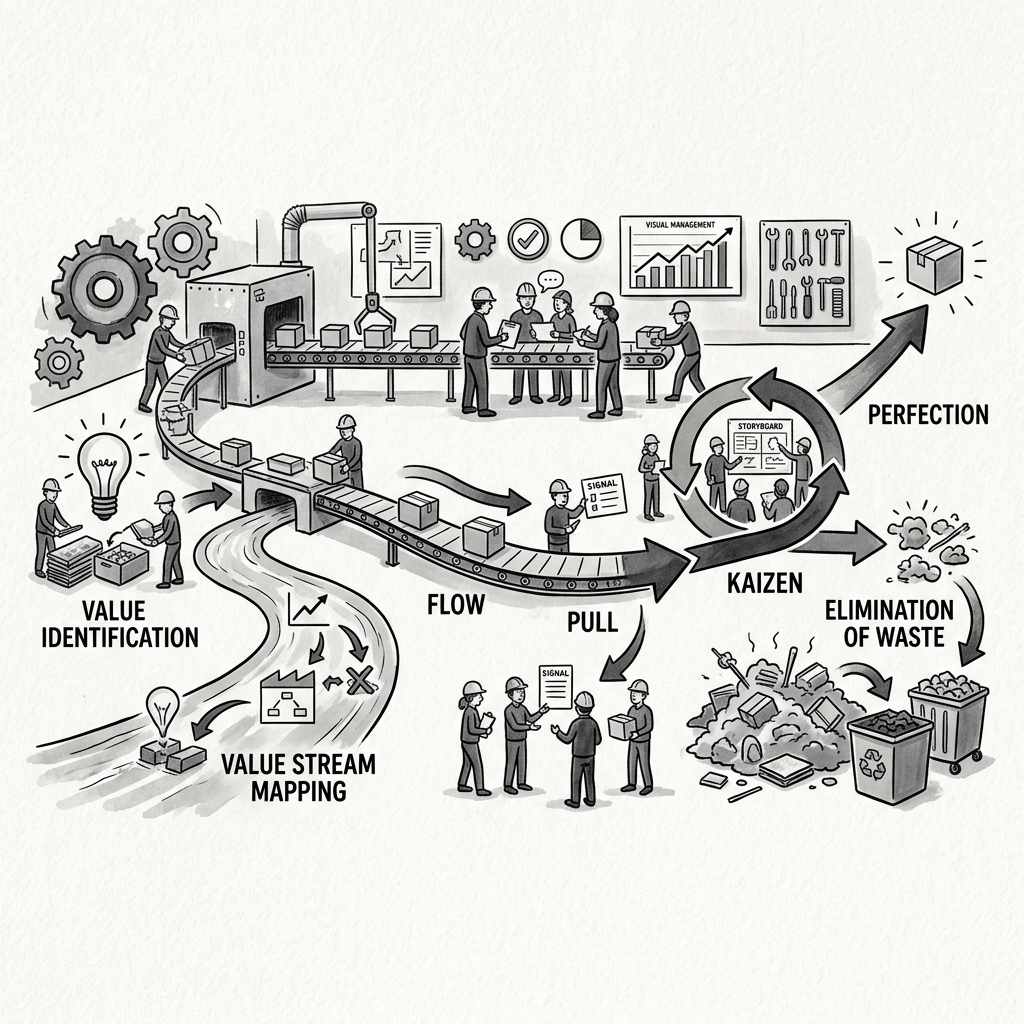
Just-In-Time production is the exact opposite of old push habits. It is a philosophy of flawless timing that advocates materials should only be brought in or produced at the exact moment they are needed, and strictly in the amount required.
Zero Inventory Goal and Capital Freedom
In the JIT philosophy, inventory is not a safety net; it is the very definition of waste (Muda). Instead of keeping goods waiting in depots, the company fine-tunes its supply chain so perfectly that the moment a part enters the factory, it goes straight onto the assembly line. The core advantages of this approach include:
- Elimination of Storage Costs: Rent, security, and lighting expenses are completely wiped out.
- Capital Liquidity: Cash previously buried in inventory is freed up and redirected to new technological investments.
- Defect Visibility: While massive inventory hides production flaws, zero inventory forces errors to be detected instantly.
Production at the Exact Moment of Need
Even if a machine has the capacity to produce a thousand parts a day, if there are only a hundred orders that day, the system will not produce the hundred and first part. Production lines interlock like the gears of a clock. No station ever processes a part that the subsequent station has not requested.
Kanban: The Signaling Network of the Pull System
The nervous system that controls the heartbeat of the JIT architecture is Kanban. Meaning "Visual Card" or "Signboard" in Japanese, Kanban orchestrates the flow of information immaculately.
Management Through Visual Signals
Kanban ensures that each station on the production line acts only when it receives a distinct signal. When a parts bin at a workstation becomes empty, the label on that bin (the Kanban card) is sent back to the previous station. This card is a silent command stating: "I have run out of materials; produce just enough new material to fill this specific box for me."
Customer Demand Dictating Pace
In a Pull system, the trigger that initiates production is always the ultimate customer at the very end of the line. When a customer purchases a product, the void left on the shelf sends a signal backwards. That signal reaches the factory, and from there, all the way to the raw material supplier. The river no longer flows blindly from the source downstream; the source only releases as much water as the customer drinks.
The Luxury Restaurant Metaphor: Chef and Waiter Dynamics
To grasp this massive system simply, let us look closely at the ordinary act of dining.
The Cost of Pre-Order Preparation
If a diner operated on a push system, the chefs would cook hundreds of portions of meat at the crack of dawn and line them up on the counter. If no customers showed up, that meat would go cold and be thrown into the trash (overproduction), causing the restaurant to lose money. This is the exact same logic as decaying goods in the warehouse of an unplanned factory.
Action Triggered by Signal
However, in a luxury restaurant, the chef (production line) stands motionless at his station. The waiter (Kanban card) takes the order (customer demand) from the table and relays it to the kitchen. The chef cooks only the specific meal written on that order, timing it so it is ready exactly when it is to be served to the table (JIT). The food does not get cold, nor are extra ingredients wasted. The entirety of the restaurant's capital is protected.