The Architectural Intelligence of Space
Physical clutter is the primary architect of operational paralysis; every unnecessary object in the system becomes a silent black hole swallowing efficiency.
The 5S methodology, residing at the very heart of the Toyota Production System (TPS), is the foundational alphabet of order, speed, and flawless execution in the industrial world. Often completely misunderstood as mere "spring cleaning," this system is actually the rigorous re-engineering of the production floor, offices, and even digital workspaces from a strict structural perspective. The first two and most critical steps of this philosophy, Seiri (Sorting) and Seiton (Set in Order), are concepts that literally reprogram physical space. By tearing out the roots of wasted time and energy, this approach extracts absolute clarity and supreme efficiency out of pure chaos.
The Mechanics of Seiri (Sorting)
Every single object present in an operational environment does one of two things: it either adds direct value to the production process, or it insidiously slows that process down. There is no middle ground. Seiri is the ruthless art of separating these two categories of objects from each other. This stage is the first step in physically identifying and annihilating the "Muda" (waste) that exists within a system.
Shedding Unnecessary Burdens
In the business world, one of the largest and hardest-to-measure hidden costs is the time lost to searching. The seconds an employee spends looking for a necessary file, a specific tool, a screw, or a digital folder accumulate into a massive temporal waste across hundreds of employees over a year. The Seiri step dictates that absolutely everything not immediately required for the current operational process must be banished from the workspace immediately.
This action frees the space not just physically, but also mentally. Obsolete spare parts, broken hand tools, reports that haven't been read in weeks, and unnecessary documents from past projects are completely purged from the environment. For items where immediate decisions cannot be made, a "Red Tag" system is deployed; these items are gathered in a holding area, and if they remain completely unused after a set period, they are permanently expelled from the system. In this way, the business effectively sheds its dead weight.
The Professional Kitchen Analogy
We can compare this situation to the workstation of a professional chef. If the menu for the day features only fish, a master chef will never, ever keep a meat cleaver, a heavy dough mixer, or massive soup cauldrons on their counter. Every single pan, pot, or utensil that will not be used in that specific service is removed from the kitchen.
This is because every unnecessary piece of equipment on the counter restricts the chef's movement, distracts their attention, and causes critical delays while cooking the fish. The sorting process is the flawless stage preparation that allows the master to focus entirely on the masterpiece right in front of them. Nothing unnecessary has a place on that stage. If there is an unused tool on that counter, it immediately transforms into an obstacle that kills the chef's momentum.
The Anatomy of Seiton (Set in Order)
Once the sorting process is complete, the remaining few, highly valuable, and absolutely necessary items must be strategically positioned. This is the realm of Seiton. The fundamental philosophy of this step is the principle: "A place for everything, and everything in its place." Setting in order is not a random arrangement; it is the engineering of human movement.
Ergonomic Positioning and Zero Search Time
In a corporate or manufacturing setting, applying Seiton means that an employee can retrieve any required item instantly, without thinking, without searching, and without any extra physical exertion. Materials are placed based strictly on their frequency of use and the natural ergonomics of the human body. Tools used hundreds of times a day are kept immediately within hand's reach, in the golden zone that does not strain the shoulders or lower back. Items used only once a week are positioned slightly further away.
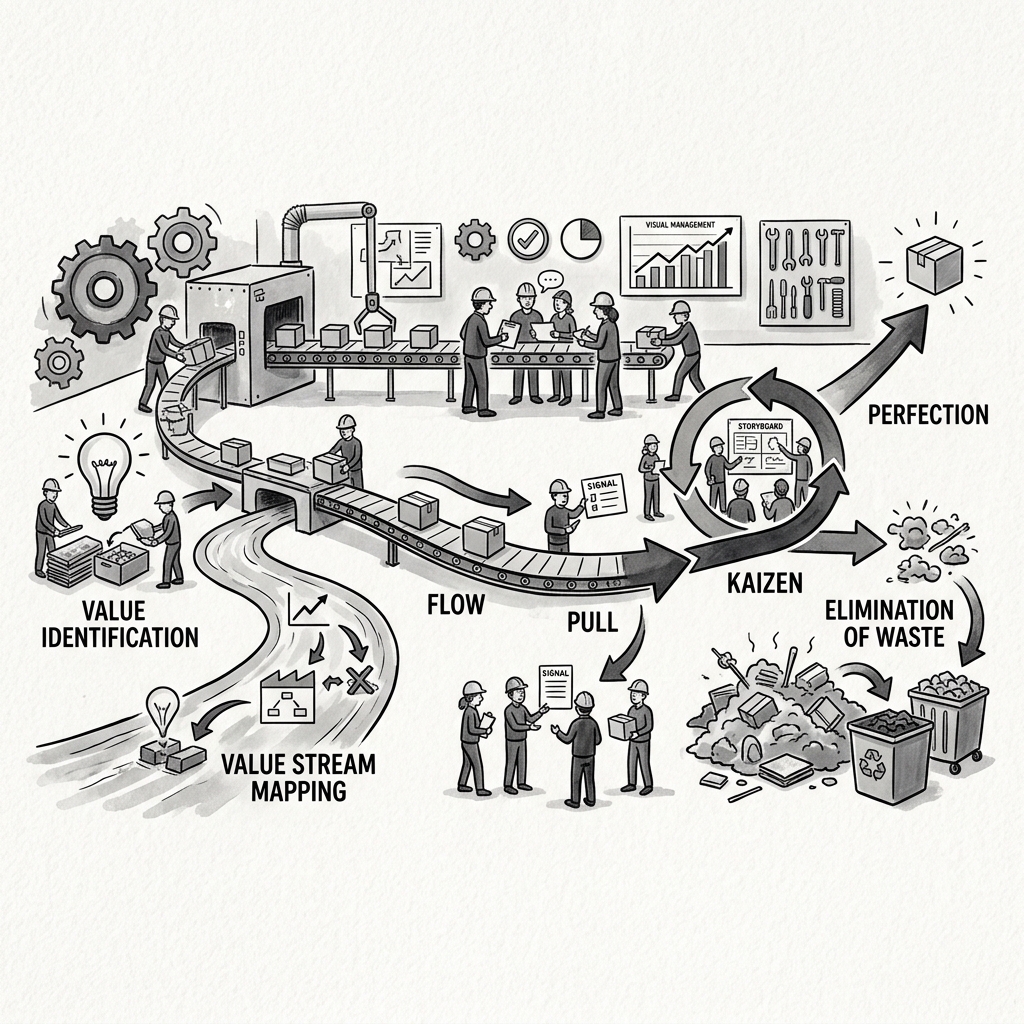
Furthermore, by utilizing visual management techniques like shadow boards, floor markings, or color-coded labeling, any missing tool is instantly noticed. If a drill is missing from its spot, the black, drill-shaped shadow behind it silently screams, "I belong here, but I am currently gone." This visual management rescues precious seconds on the assembly line, drops the risk of errors to zero, and guarantees a flawless operational flow. Mental fatigue is eliminated because the employee does not search for where things are; the system automatically shows them.
The Blindfolded Reach Reflex
Returning to our kitchen metaphor, once the chef has isolated the essential items through sorting, they do not just throw them randomly onto the table. The chef places the specialized fish-slicing knife perfectly aligned with their right hand, and arranges the required spices in highly specific spots where they can reach them even with their eyes completely closed.
When the stove is turned on and those critical seconds arrive, the chef does not waste a single millisecond wondering where the frying pan is located. Everything is positioned so strategically that muscle memory takes over completely. This perfect structural order is the invisible engineering marvel that allows the chef to rapidly prepare hundreds of exquisite dishes during a chaotic dinner rush, without a single moment of panic, stress, or error.