The Agile Manifesto And Scrum
Making long-term plans in highly uncertain environments is an illusion; the system touches reality only through short, testable iterations.
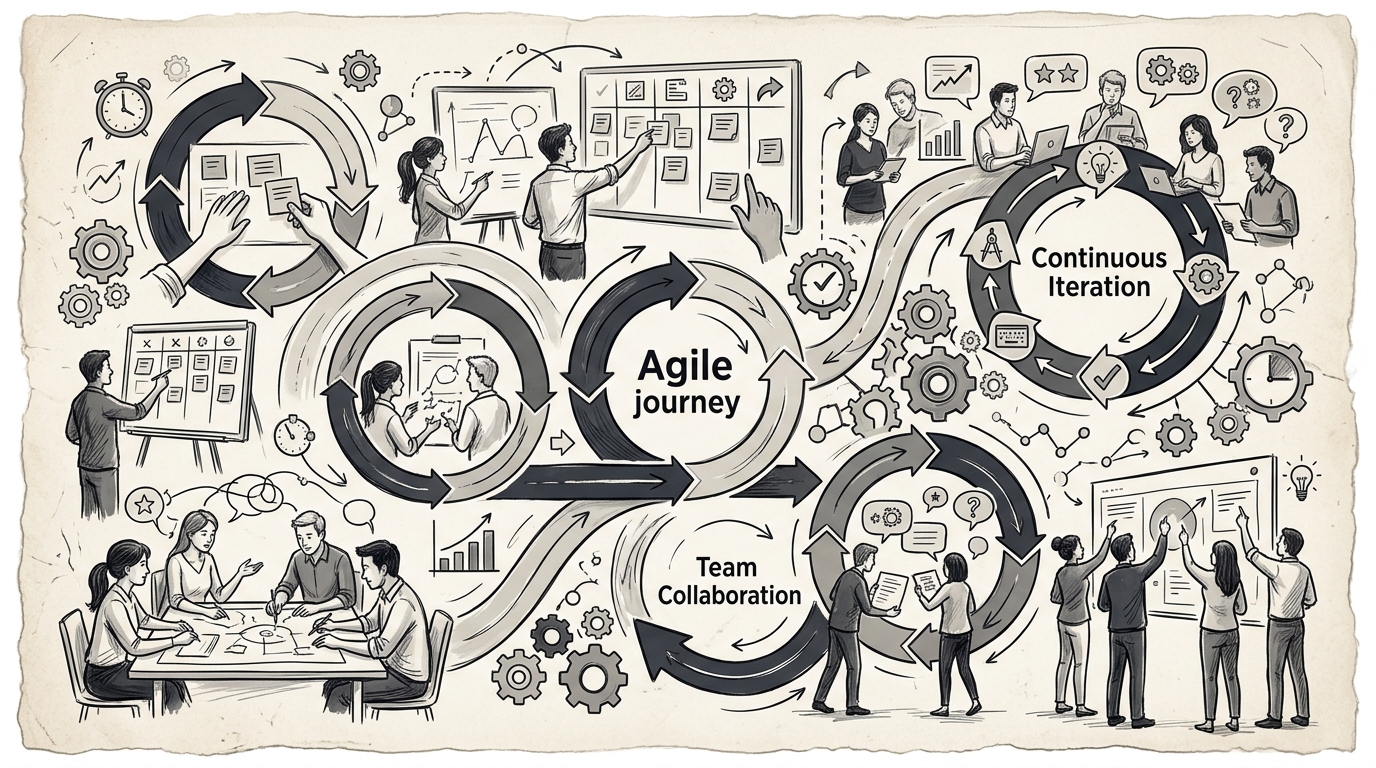
The Agile Manifesto emerged as a rebellion against the bottlenecks created by rigid documentation and bureaucratic planning processes in the software and R&D worlds. At its core lies the delivery of a working product to the customer rapidly, constantly evolving through continuous feedback. Focusing on individuals over processes, and customer collaboration over contract negotiation, this philosophy positions change not as a threat but as a competitive advantage. In modern technological ecosystems where markets can pivot in seconds, Agile is not merely a choice, but a mechanics of survival.
Scrum is the most widespread framework that grounds this agile philosophy into a practical, executable skeleton. It dismantles the project from a massive months-long monolith and breaks it down into short, intense, and functional production cycles, typically 2 weeks long, called "Sprints." Autonomous units comprised of the Scrum Master, Product Owner, and development team deliver a testable, working increment at the end of each sprint. While obstacles are instantly identified through brief daily meetings (Daily Scrum), the team constantly optimizes its own production mechanics via retrospectives at the end of sprints. This approach prevents colossal failures and provides a low-cost maneuvering space when a wrong path is taken.