Building the Future and the Oceanic Route
Feature lists that merely save the day will only keep a company afloat, while a visionary navigational plan will carry it to entirely new continents.
In the modern business world, creating a product is not just about writing code or manufacturing hardware. The real challenge is foreseeing how this product will evolve over time, which markets it will penetrate, and ultimately what it will transform into. This is where the strategic planning document emerges, acting as the ultimate compass for the company. This planning is the big picture that reveals not just what to do next month, but where the company will stand years from now.
Translating Vision into Reality
Many people confuse strategic planning with a simple to-do list. However, a true planning document is the physical embodiment of the vision. Customer expectations, market dynamics, and the core purpose of the company dance in perfect harmony upon this document.
Architectural Alignment with Customer Expectations
A company must build not just what its engineers are capable of, but the solutions that customers truly need. The strategic planning document takes customer demands and translates them into technical engineering processes. Consequently, every new extension or service produced focuses directly on solving a tangible problem in the customer's life.
- Discovery of True Needs: Analyzes the gap between what customers say they want and what they actually need.
- Value Centricity: Mandates that every new capacity added to the system generates measurable value for the end user.
- Feedback Loops: Transfers customer feedback directly into the production line to adapt quickly to market dynamics.
Integration with Company Vision
The company vision is often an abstract sentence. Strategic planning breaks this abstract sentence down into concrete milestones. If the company's vision is to change the world, this planning serves as your step-by-step guide on what tools to use and in what order to execute that change.
The Captain's Bridge of an Ocean Liner
The best way to understand complex business strategies is to map them to simple realities in the physical world. We can liken the product development process to a colossal ocean liner.
The Grand Navigational Chart
Think of the strategic product plan as the giant navigational chart hanging in the captain's bridge of this ocean liner. The chart clearly shows you which port you are in today. Simultaneously, it marks which distant island you will reach three years from now. The route in between, the fuel to be used, the straits to cross, and the other ports to visit are determined in advance. The route is largely fixed; only if an unexpected storm (an economic crisis or a massive technological shift) arises does the captain update the trajectory. However, the ultimate destination, meaning the vision, always remains the same.
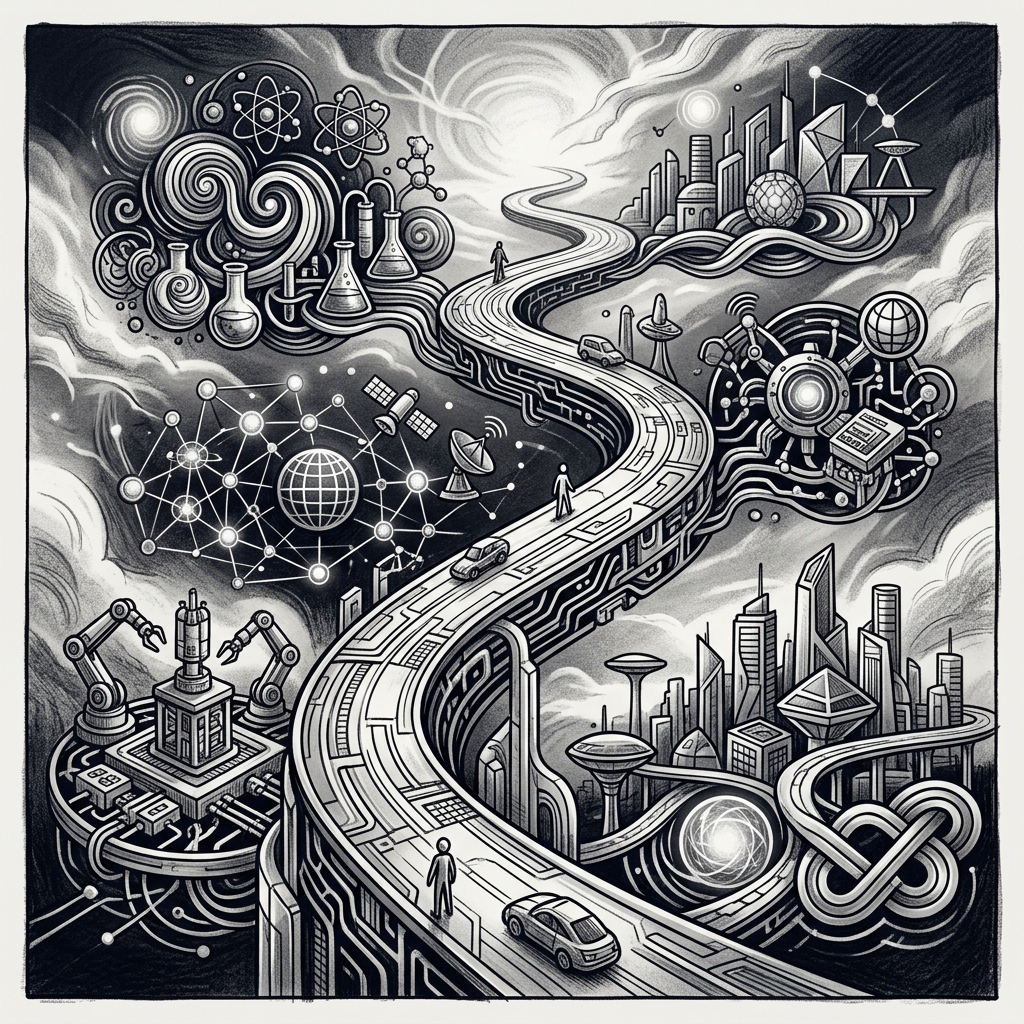
The Mechanics of Strategic Alignment
When developing a product, you must simultaneously consider today, tomorrow, and the distant future. These three time horizons must be aligned flawlessly with each other.
Short-Term Ports (Present Realities)
Our short-term goals are the immediate ports the ship will visit. These are highly clear and detailed tasks that typically need to be completed within the next three to six months. They are the daily operations that solve urgent customer issues, fix existing bugs in the system, and keep the product functional. Uncertainty is extremely low at this stage.
Medium-Term Straits (Growth and Scaling)
Medium-term plans are the strategic moves spanning the next one to two years. The ship has now sailed into open seas and is heading towards new continents. The focus here is on entering new market segments, significantly enhancing the product's capabilities, and securing a competitive advantage. The margin for flexibility is slightly higher in the medium term.
Long-Term New Continents (Visionary Goals)
Long-term plans encompass three years and beyond, representing the ultimate goals of the ship. This stage is entirely about innovation and vision. Anticipating future technologies, creating a brand new product category, or completely eliminating a fundamental global problem are the subjects of this horizon. The details are blurry, but the direction is absolutely clear.
Differences Between a Feature List and a Vision Document
Many organizations fall into the trap of mistaking a strategic product plan for a simple feature list. This is like merely keeping a tally of the screws on the ship rather than charting its course.
Macro Value vs Micro Outputs
A feature list enumerates the technical tasks the system will perform (e.g., add a new button, update the database). However, a vision document explains why these tasks are being done and what value they will generate. While a feature list focuses on outputs, the strategic plan focuses on outcomes and vision. An engineer looks at a feature list to write code; but a leader looks at the strategic plan to shape the future.
- Lack of Direction: Focusing solely on technical tasks causes teams to miss the big picture.
- Resource Wastage: Features that are not grounded in strategy consume the company's time and capital.
- Sustainability: Focusing on a few moves that create real-world impact brings success, rather than building countless technical features that generate no value.