
The Architectural Design of Strategic Advantage
How far a structure can go is determined not just by its engine power, but by how well it utilizes the wind it encounters along the journey.
Imagine you are building a castle. The thick walls of the castle, the training level of the soldiers inside, and the food supplies are entirely under your control. However, the weather outside, the number of enemies, or changes in trade routes are entirely out of your control. In the business world, companies are exactly like these castles. They have strengths and weaknesses within themselves. Outside, there are opportunities and threats that they cannot control. To understand this complex structure and to design a proper defense or attack plan, we use engineering tools called SWOT and TOWS matrices.
SWOT Analysis: Recognizing Internal and External Forces
SWOT is like a radar system that simultaneously projects both the internal engine condition of a car and the weather of the road it will travel onto a screen. This system vectorially analyzes the internal capabilities of the organization and the conditions presented by the external world.
Strengths
Strengths are the advantages your company possesses internally and can control. You can think of them as the strongest mast or the most experienced captain on a sailboat. These are the internal forces that make you superior to your competitors.
- Brand Awareness: The sense of trust people feel when they hear your name.
- Technological Infrastructure: Systems that allow you to do things much faster and more flawlessly than competitors.
- Cash Power: Financial fuel sufficient to keep the ship afloat during hard times.
Weaknesses
Weaknesses are the flaws or shortcomings your company has internally. Like a small crack in the hull of a ship or an old engine, they are internal frictions that slow the organization down.
- Missing Skills: Lack of employees with knowledge in a specific field of expertise within the company.
- Outdated Processes: Decision-making mechanisms working very slowly and clumsiness.
- High Costs: Spending more money than competitors while doing the same job.
Opportunities
Opportunities are positive air currents that develop outside of you and that you can use to your advantage. It is like the wind blowing right from behind you. You do not create them, but if you open your sails at the right time, they carry you forward very quickly.
- New Markets: The discovery of a new region or country that needs your product.
- Competitor Weakening: Your biggest competitor in the market making a mistake and losing market share.
- New Technologies: The invention of a new machine that will allow you to manufacture much cheaper.
Threats
Threats are external storms that you cannot control and that can harm your business. They are obstacles or bad weather you might face on the road.
- New Competitors: A very strong and rich company doing the same business entering the market.
- Economic Crises: People stopping spending money and the market shrinking.
- Rule Changes: The government introducing new laws or taxes that make your way of doing business harder.
TOWS Matrix: Converting Forces into Action
SWOT analysis only detects the situation. It tells what the illness is or how healthy the body is. However, the TOWS matrix takes this diagnosis and writes the prescription. It converts the situation assessment into strategic attack or defense moves to be applied in the real world.
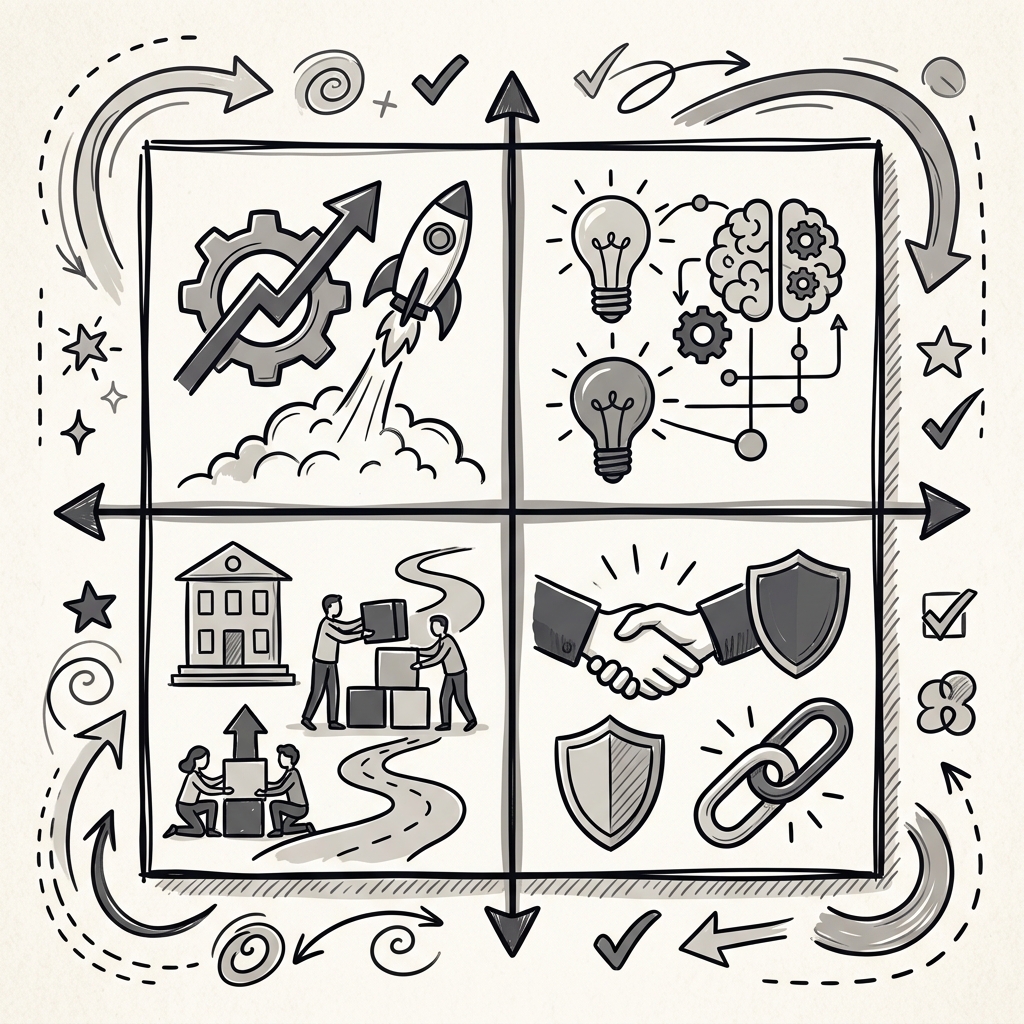
The TOWS matrix creates asymmetric advantages by cross-matching your internal capacities with your external conditions. It draws four different strategic routes.
Strength-Opportunity (Maxi-Maxi) Strategy
This strategy is the plan to capture the biggest external opportunities using the most muscular and strongest aspects of your company. It is going full speed ahead when the wind is behind you and you have the best sails. If you have a very strong brand name (Strength) and a newly opened large market (Opportunity), you rapidly enter that market and grow. This is the engine of maximum growth and progress.
Weakness-Opportunity (Mini-Maxi) Strategy
This strategy is the plan to repair or cover up your internal weaknesses in order to catch a great external opportunity. There is a great asphalt road ahead of you (Opportunity), but your car's tires are old (Weakness). You immediately change the tires or get support. For example, if a new technology market is growing very fast (Opportunity) but your team does not know this technology (Weakness), you do not miss this opportunity by partnering with an expert company from the outside.
Strength-Threat (Maxi-Mini) Strategy
This route is the strategy of using your thickest shields (Strength) against an approaching big storm (Threat). You fend off the impact of the external danger with your strong internal muscles. Let's say new competitors selling very cheap products are entering the market (Threat). However, your customers love your brand very much and are very loyal (Strength). Instead of cutting prices, you neutralize the enemy's weapon by emphasizing the quality and loyalty of your brand even more.
Weakness-Threat (Mini-Mini) Strategy
This is the most dangerous and urgent defense strategy. You are both weak internally and a major threat is coming from the outside. It is like getting caught in a storm while the bottom of the ship has a hole. In this case, the goal is purely to survive. The total collapse of the company is prevented by taking radical decisions such as downsizing, closing some business lines, or being sold to (merging with) a strong company.