Situational Leadership
Leadership is not a static identity but a dynamic algorithm that reshapes itself according to the receiver's capacity; a one-size-fits-all management style will eventually suffocate talent or lead to chaos.
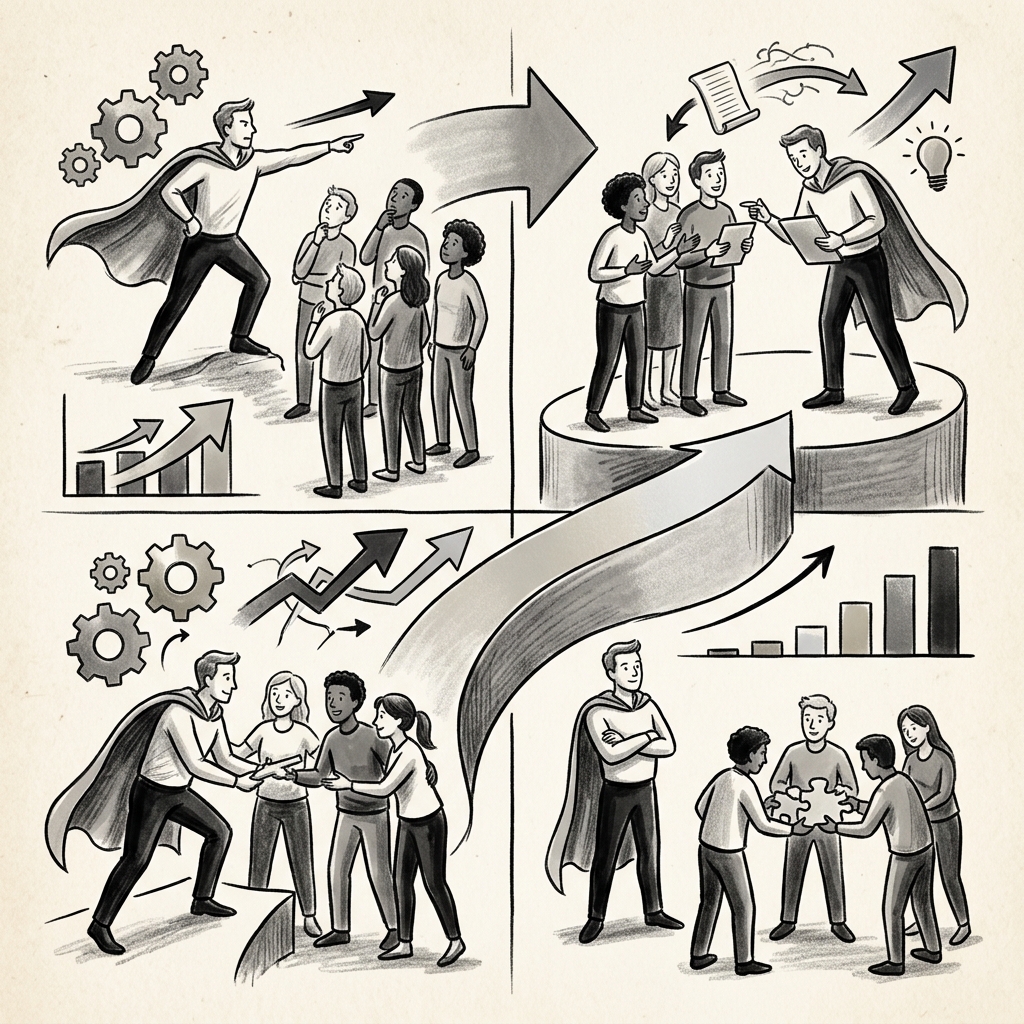
Situational leadership is a flexible model that requires managers to adapt their approach based on the development levels and task execution capacities of their employees, rather than sticking to a rigid personal style. While traditional systems often frame being a "good leader" within a single template, this modern approach suggests that effective leadership must be entirely calibrated to the situation and the individual's current maturity level. The realization that a person can exhibit varying levels of maturity across different projects simultaneously forms the core dynamic of this methodology.
This model incorporates four primary approaches. For an inexperienced yet enthusiastic individual, the leader provides clear instructions through a directing approach. When the person realizes the difficulty of the task and experiences a dip in motivation, the leader shifts to a coaching phase, offering both direction and psychological support. Once the employee gains competence but lacks confidence, the supporting role comes into play. Finally, for highly competent and confident experts, the leader steps back entirely, activating the delegating mechanism.