
The Corporate Shock Absorber
Intellect gets a person into the room, but emotional resilience is what extinguishes the fire and gets everyone out alive.
Success in the business world is often defined by technical skills and intelligence quotient (IQ). A person's ability to solve complex mathematical models or write flawless code is the foundational element that gets them hired. However, as one climbs the career ladder, the weight of technical knowledge decreases, and the ability to manage people, crises, and emotions takes center stage. This is exactly where Emotional Intelligence (EQ) comes into play. Emotional intelligence is the most critical leadership skill that prevents a company from capsizing even in the most turbulent economic crises.
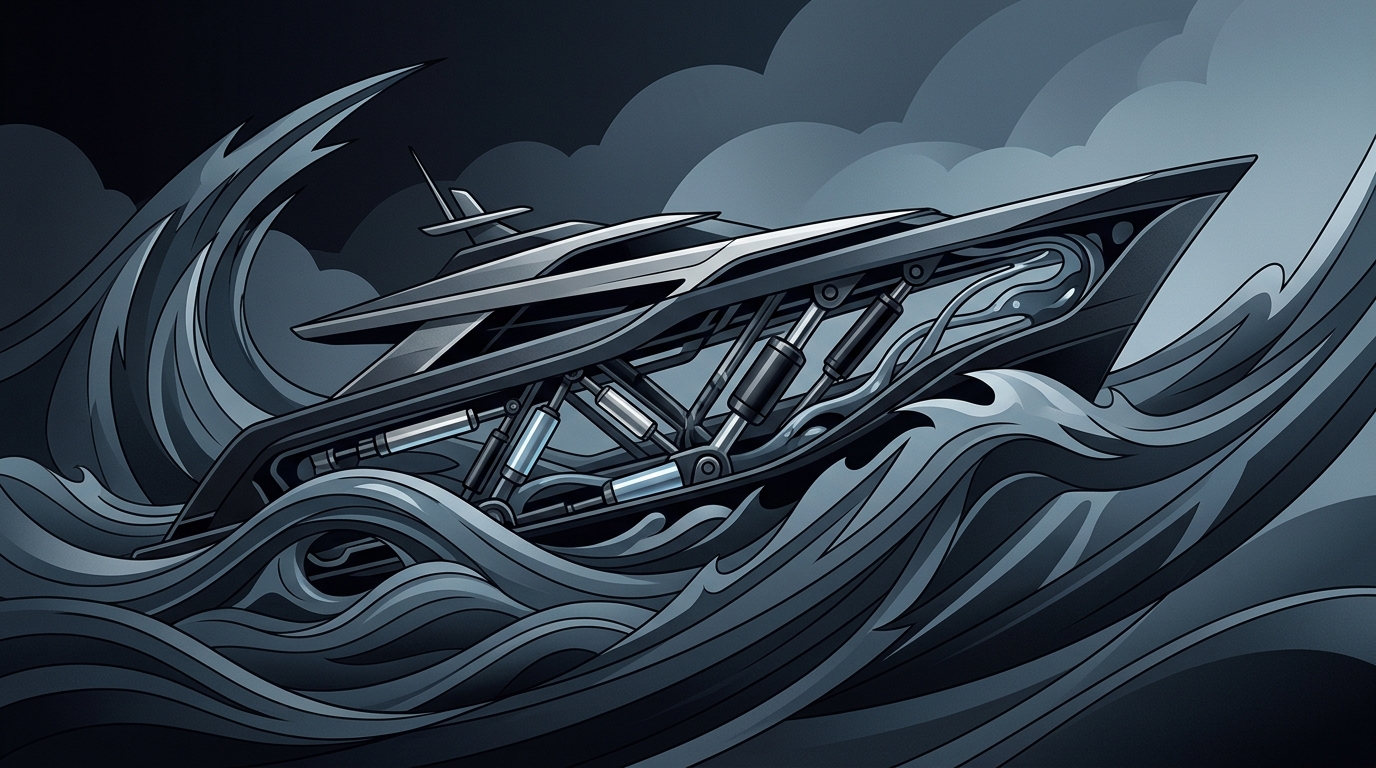
Consider a ship's journey across the ocean. IQ is the engine of that ship; the more powerful it is, the faster the ship travels. But the ocean is not always flat and calm. Crises, human conflicts, and stress are the massive storms and waves at sea. When the waves hit the ship hard, the power of the engine cannot prevent the vessel from breaking apart. What holds the ship together and dampens the destructive impact of the blows is an advanced shock-absorbing system. Emotional intelligence is the shock absorber in an organization. The engine power drives you forward, but without your suspension system, your entire framework collapses at the first major storm.
The Architectural Pillars of Emotional Intelligence
Emotional intelligence is not a singular trait but a structural system built upon four foundational pillars. If a leader neglects any of these pillars, the balance of the entire framework is disrupted.
Self-Awareness
Self-awareness is a leader's ability to clearly read the map of their own inner world. This is not just knowing what one feels, but also seeing with mathematical clarity how those feelings affect the people around them and the decisions they make. A leader who knows their weaknesses, anger triggers, and blind spots hears their internal alarm system before making flawed decisions. Highly self-aware leaders insulate the damage before it spreads to their surroundings whenever they sense a storm approaching on their emotional radar.
Self-Management
Awareness is detection, while self-management is intervention. During a crisis, the brain naturally triggers a fight-or-flight response. Self-management is the ability to pass this primitive reaction through a filter of logic. When a company takes a massive financial hit or loses a major client, panicking or shouting orders is like pouring gasoline on a fire. A leader with strong self-management puts their anger or fear in a cage, takes a deep breath, and delivers only rational, reassuring instructions to their team. This is akin to pressing a car's brake pedal at exactly the right moment; it controls the speed and prevents the crash.
Social Awareness and Empathy
Empathy is the art of seeing the world through the glasses of the person on the other side of the table. Social awareness is the ability to instantly analyze what the silence in a meeting room means, why an employee's shoulders are slumping, or why a client is becoming defensive. Empathetic leaders sense when their teams' motivation drops or when they approach the brink of burnout long before looking at data spreadsheets. Employees stand like a shield against hardships behind a leader who truly understands them.
Relationship Management
The fourth and highest layer, relationship management, is where the first three components combine and translate into action. This ability means resolving conflicts, inspiring teams, finding common ground in negotiations, and building long-term bonds of trust. Relationship management is the conducting of an orchestra, persuading different departments or employees of varying characters within the company to play in the same symphony. Poorly managed relationships create friction in the organization, whereas well-managed relationships lubricate business processes, making them faster and smoother.