Emotional Intelligence EQ
A mind unable to read its own internal fluctuations cannot govern the storms of the external world; emotional intelligence is not a weakness, but the most advanced engineering for remaining rational during crises.
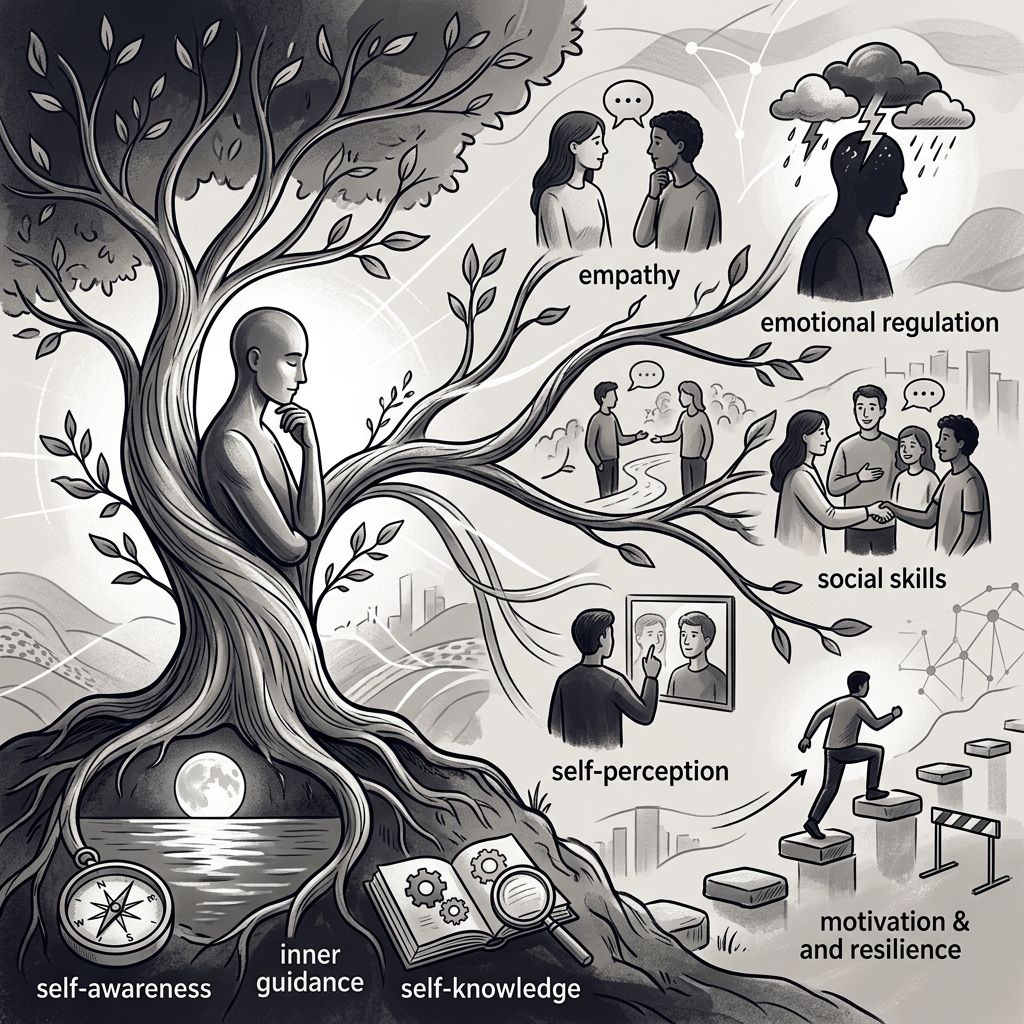
Emotional intelligence (EQ) extends beyond cognitive analytical capacity (IQ) to encompass an individual's ability to perceive, understand, and strategically manage complex emotional data within themselves and social signals from their environment. In corporate architecture, while pure technical intellect often secures the entry ticket to a position, the depth of emotional intelligence is the sole determinant of survival in critical tiers such as executive leadership and crisis management. This competency positions empathy not as a vulnerability, but as a powerful analytical tool capable of decoding the counterpart's decision-making mechanics.
An advanced EQ infrastructure is built upon four foundational pillars. The first is self-awareness, the phase where one comprehends their own triggers and real-time emotional state. This is followed by self-management, a mechanism that prevents these triggers from morphing into destructive actions. Moving outward, social awareness activates the ability to read the emotional states of others and the unwritten dynamics of the organization. Ultimately, all this data converges into relationship management—the capacity to resolve conflicts, motivate teams, and forge long-term networks of trust.