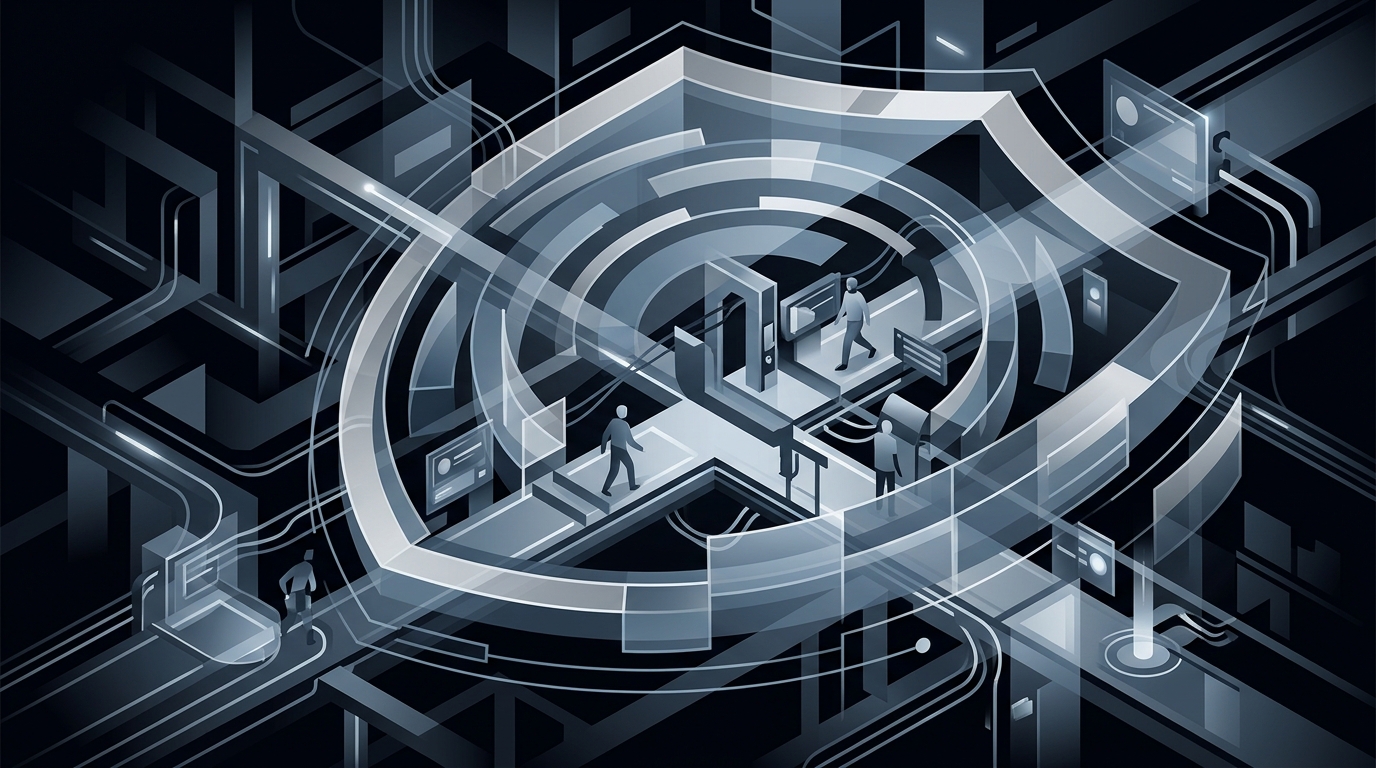
The Invisible Shield and Operational Safety Architecture
Occupational safety is not a cost center; it is the ultimate insurance policy for operational continuity and corporate honor. The price paid after an accident always outweighs the cost of prevention.
ISO 45001 is a global, systematic, and strategic architecture that companies use to manage occupational health and safety (OHS). It is designed to prevent workplace accidents, injuries, and occupational diseases. However, it is far more than traditional "be careful" signs. It is a living, mathematical framework integrated into all company processes, constantly updating and improving itself.
In the business world, safety is not just a legal obligation; it is a fundamental requirement for productivity. A severe accident can halt production lines for days, lead to million-dollar lawsuits, and destroy a company's reputation overnight. ISO 45001 establishes a "proactive" system—meaning it foresees hazards before accidents occur—to reduce these devastating consequences to absolute zero.
You can think of this system as the strict safety protocols of a professional Formula 1 racing team. The team's primary goal is to drive the car at maximum speed (maximum production) and win the race. However, the driver's helmet, the fireproof suit, the titanium protection bar called the halo, and the flawlessly executed pit stop rules (the ISO 45001 standards) are the true elements that ensure the car finishes the race without a crash. A crashed, shattered car can never win a race. Speed is only useful when enclosed within a shield of safety.
Core Building Blocks of the ISO 45001 System
The system is a rigid set of rules and cycles encompassing everyone from the highest executive to the lowest-level worker. Every component forms a different piece of the invisible shield.
Context of the Organization and Ecosystem Analysis
Before establishing the safety system, the company must understand exactly where it stands, what risks it is exposed to, and what is happening in its surroundings. Both internal and external conditions are analyzed.
- Internal Factors: The physical structure of the factory, the education level of the employees, the age of the machinery.
- External Factors: Government safety regulations, labor union demands, and technological shifts.
We can think of this phase as the Formula 1 team analyzing the weather, track layout, and race rules before the event begins. You cannot race on a wet track with dry-weather tires.
Leadership and Worker Participation
One of the most revolutionary aspects of ISO 45001 is its mandate that safety is not just the job of the "safety officer"—it is the direct responsibility of the CEO and top management. Simultaneously, it forces the active participation of shop-floor workers in decision-making.
- Leadership Commitment: Top management does not merely provide a budget; they personally follow and enforce the safety rules.
- Worker Voice: The worker operating the machine sees the hazard better than the manager. A culture is created where workers can report risks without fear of retaliation.
This is akin to the team principal coming down to the pit lane to personally inspect the tires, and carefully listening to the driver (worker) complain about vibrations over the radio to find an immediate solution.
Planning and Root Cause Detection
Accidents do not happen by chance; they are the result of a chain of failures. Companies examine all their processes microscopically and list potential hazards.
- Hazard Identification: Everything from a tiny oil spill on the floor to a high-voltage electrical panel is mapped out.
- Risk Assessment: The potential damage of each hazard is mathematically calculated and prioritized.
This stage is like race engineers testing every car component in computer simulations before the race, calculating exactly at which kilometer a specific part might break (risk estimation).
Support and Resource Allocation
Plans might look perfect on paper, but they require real resources to execute.
- Financial and Human Resources: Purchasing the necessary protective equipment and hiring the right people to manage safety.
- Competence and Awareness: Teaching workers not just what to memorize for emergencies, but the logical reasoning behind why safety matters.
In our racing metaphor, this means buying the highest quality, lightest helmet (budget) and training the driver on how to detach it in seconds during a crash (training).
Operation and Hazard Elimination
This is the phase where plans become reality on the ground. ISO 45001 uses a specific hierarchy of controls to deal with hazards.
- Elimination: The best solution is to completely remove the hazard (e.g., stopping the use of a toxic chemical entirely).
- Substitution: Replacing the dangerous element with a less dangerous one.
- Engineering Controls: Adding steel cages or automatic shut-off sensors around machinery.
- Personal Protective Equipment (PPE): Measures like hard hats and gloves are always the last resort.
This hierarchy is identical to the logic on a race track: to prevent a car from slipping, first try to clear the water from the track (elimination); if impossible, switch to treaded rain tires (substitution).
Performance Evaluation and Auditing
Once built, the system cannot be left alone. It must be continuously measured and audited.
- Internal Audits: The company strictly audits itself before any external inspector arrives. Cameras are reviewed, processes are tested.
- Management Review: The CEO and executives gather to demand answers: "Is our system working? How many near-misses did we have?"
This is exactly like thousands of data points (telemetry) streaming from the race car to the pit wall every second, allowing engineers to monitor engine temperature in real-time to detect any anomalies.
Continuous Improvement
The system is not expected to be flawless from day one, but it is required to be better than yesterday.
- Corrective Actions: When an accident or a "near-miss" occurs, instead of asking "who is to blame?", the company asks "where did the system fail?" and permanently closes that loophole.
If a tire change takes 5 seconds instead of 3 during a race, the entire crew re-watches the video afterward, discovers the flaw was in the wheel gun, and completely redesigns that tool for the next race.