
Systemic Fractures and The Anatomy of Root Causes
Blaming the human only saves yesterday and comforts the conscience; blaming the system secures the future and rebuilds the very architecture of the organization. Every accident is the scream of flawed mathematics overlooked in the design.
Operational excellence in the corporate world is not achieved by the primitive reflex of looking for someone to punish when an error occurs, but rather through a cold-blooded engineering approach that analyzes the systemic voids allowing that error to manifest. At the very core of ISO 45001 standards, Incident Investigation and Root Cause Analysis (RCA) treat hazards and accidents not as mere human failures, but as total hardware or software crashes in the enterprise's overarching architecture.
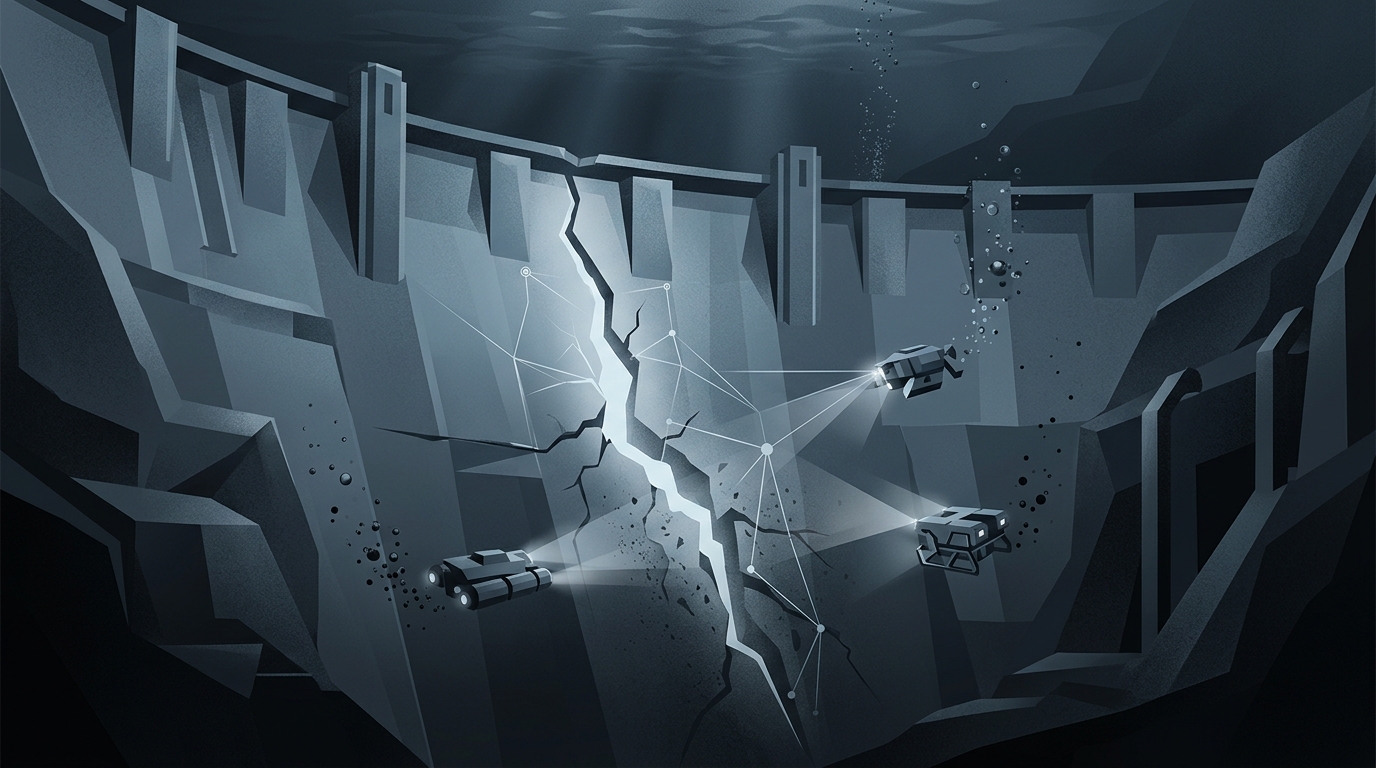
Imagine the corporation as a colossal hydroelectric dam holding back a massive, wild river (the hazards). A "Near Miss" is a tiny crack that suddenly appears in that giant concrete block, spraying a thin jet of water. The worker who sees that leak might get wet and step aside, and the dam has not yet collapsed (no accident). A weak, traditional management mindset believes it has solved the problem by placing a bucket in front of the water or blaming the worker, asking "why weren't you more careful while walking there?" However, Root Cause Analysis (RCA) is not interested in putting a band-aid over that crack. A true analyst dons a diving suit and descends miles deep into the dark waters to investigate why the concrete in the dam's foundation deteriorated over the years. Searching for blame in the human is placing a bucket; searching for blame in the system is redesigning the foundation of the dam.
The Architecture of Incidents and Signals
The Warning Power of Near Miss Events
Near miss events are, in reality, free gifts presented to the company by the universe or the system. They are mathematical signals that clearly reveal the system's weakest point before any loss of life, injury, or financial damage occurs. It is that thin water leak in the dam metaphor. Rewarding rather than hiding near miss reports is the cheapest and most absolute way to prevent colossal explosions in the future.
The Distinction Between Incident and Accident
Every accident is an incident, but not every incident is an accident. An Incident is any deviation that disrupts the normal flow of work and has the potential to cause harm. An Accident, on the other hand, is the ultimate breaking point where this potential turns into reality, blood is spilled, or the financial balance sheet is devastated. ISO 45001 does not wait for the accident; it expends all its energy on eliminating incidents (leaks) during their critical incubation period before they turn into accidents (dam collapse).
Root Cause Analysis (RCA) Methodology
The Deep Reality Behind Symptoms
When a worker slips and falls, the symptom appears to be a "wet floor" and the solution seems to be "mopping the ground." This approach only saves that particular shift. Root Cause Analysis is about confronting the reality of why the floor was wet, why that specific machine leaked water, and why the maintenance budget that would have prevented the leak was canceled by the board of directors three months ago. The real problem is not the wet floor; it is flawed budget planning.
The 5 Whys Technique
The 5 Whys technique, born of Japanese engineering, is a powerful drill that excavates from the surface of the event straight to its core.
- Why did the worker fall? Because the floor was oily.
- Why was the floor oily? Because the machine was leaking oil.
- Why was the machine leaking? Because its internal seal was worn out.
- Why wasn't the seal replaced on time? Because the planned maintenance schedule was skipped.
- Why was the maintenance skipped? Because a sufficient spare parts budget was not approved for the maintenance department.
This simple interrogation mathematically proves that the true culprit is the unapproved purchasing budget, exonerating the allegedly careless worker.
Categorical Decomposition with the Ishikawa (Fishbone) Model
Complex, multi-variable problems cannot be attributed to a single cause. The fishbone diagram maps out all potential causes that could create the problem (the head of the fish) under the categories of Manpower, Machine, Material, Method, Measurement, and Milieu/Environment (the 6Ms). This template eliminates the team's blind spots, making it visible that the issue is a multidimensional systemic collapse rather than a one-dimensional error.
Improvement and Reconstruction
The Reality of the Scene (Gemba)
Reports always present reality in an incomplete or manipulated state. The most fundamental rule of incident investigation is to physically go to the exact spot where the event occurred—the factory floor, the Gemba—and observe the physical evidence with the naked eye. Analyses conducted in meeting rooms are merely theoretical assumptions; true engineering begins in the field, right where the oil and rust reside.
The Precision of Corrective and Preventive Actions (CAPA)
Once the root cause is found, the resulting actions cannot be weak administrative measures like telling people to "be more careful." A true CAPA must physically render the process error-proof. The design of the dam is altered, the budget approval rules of the maintenance system are hardcoded into the software, and the probability of the system generating the exact same error a second time is reduced to absolute zero through engineering barriers.