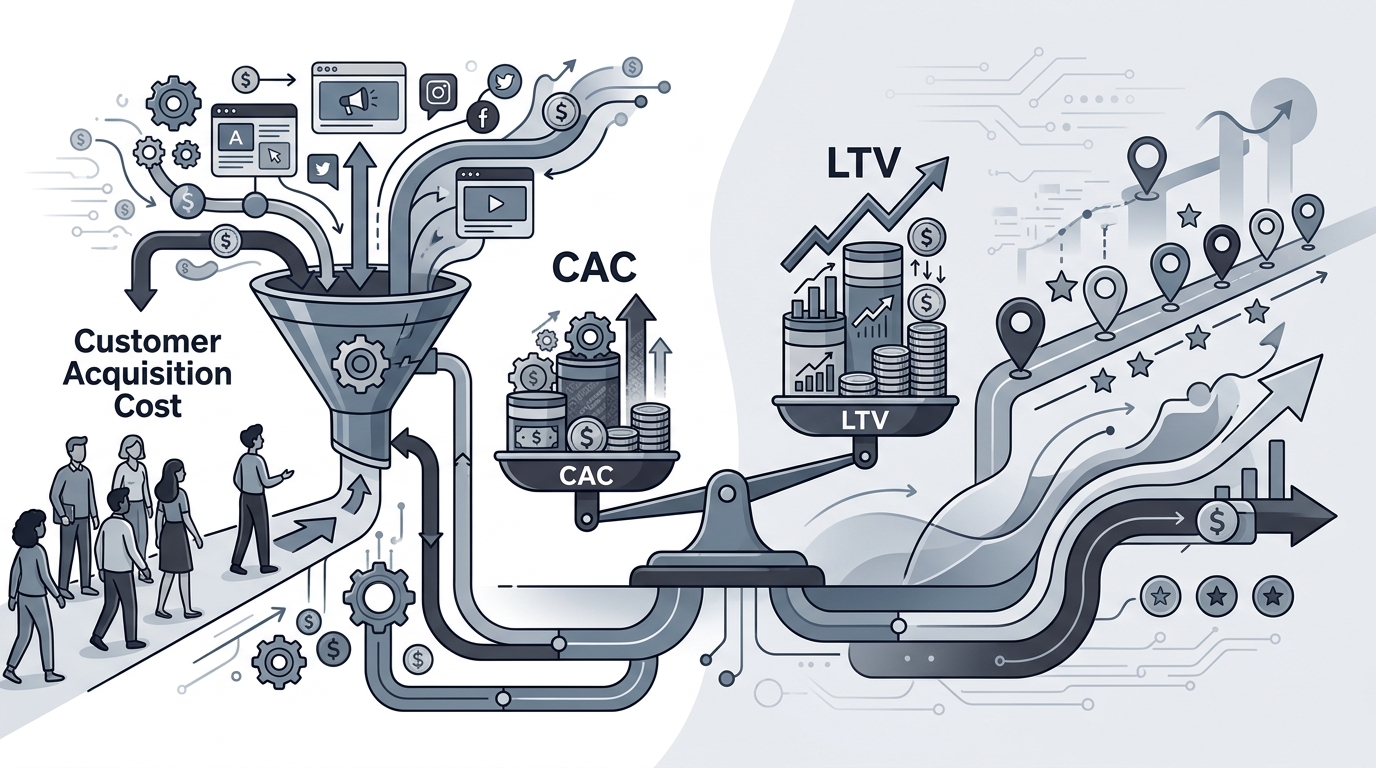
Customer Acquisition Cost Vs Lifetime Value
If the money you spend to acquire a customer is higher than the total amount they will pay you by staying in the system, your company will go bankrupt as it grows.
The ratio between Customer Acquisition Cost (CAC) and Lifetime Value (LTV) is the most ruthless and clear indicator of a business's commercial feasibility. While CAC represents the sum of all effort and budget spent by sales and marketing departments to convince a customer, LTV measures the total profit this customer will leave during their stay with the company. In an ideal business model, LTV is expected to be at least three times greater than CAC.
The biggest mistake made in startups is focusing solely on increasing the number of customers while ignoring unit economics. A small increase in customer retention rate multiplies LTV. If a company cannot lower its CAC or increase its LTV, scaling only means accelerating bankruptcy.