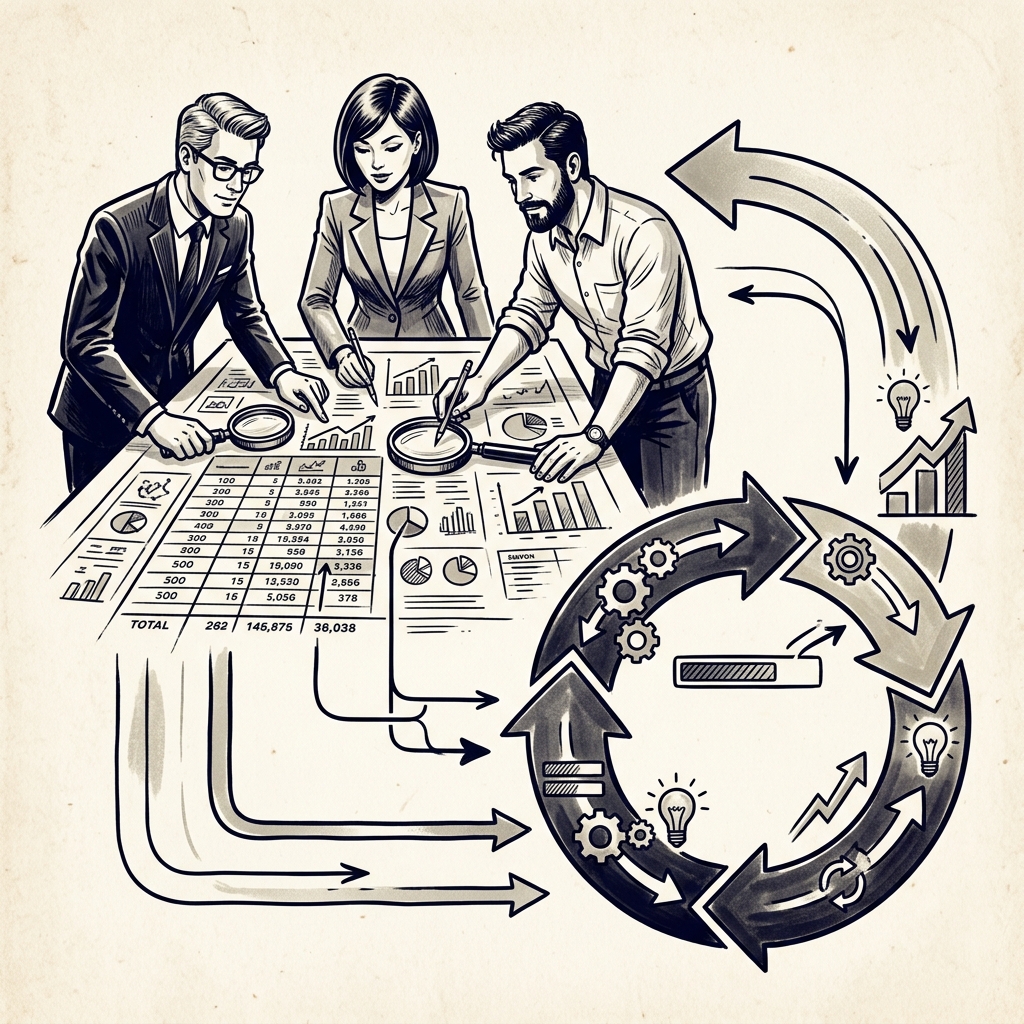
Management Review
A strategy becomes obsolete the day it is written on paper; the only force that keeps it alive is periodic confrontation with ruthless field data.
The vision and goals established at the highest tier of corporate architecture are merely aspirations unless tested against the operational reality on the ground. The Management Review is the grand reckoning where the company's top executive team descends into the engine room to lay all system outputs, internal audit findings, and resource adequacies on the table. This meeting is not a mundane status update where the past is reported; it is the finale of a closed-loop feedback cycle that uses gathered data to return to the first phase (Strategy and Goals).
The nature of a Management Review demands ruthless transparency. Unmet targets, recurring customer complaints, and unresolved non-conformities (CAPA) must reach top management without filtration. The objective here is not to interrogate the lower echelons, but to test whether "the system" remains competent under current market conditions. If targets have not been met, leadership must take ownership of resource deficiencies, poor technology choices, or strategic misalignment errors, and chart a new course.
The output of a genuine Management Review meeting is not a hollow set of minutes, but radical actionable decisions. Budgets are reallocated, organizational structures are updated, and quality targets are revised. By completing its self-optimization cycle, the system embarks on the following year in a significantly more resilient and agile form.