
The Invisible Blades Slashing Efficiency
Operational excellence is often associated with engineers holding stopwatches in factories or managers trying to speed up processes. However, the concept of fighting waste at the heart of the Toyota Production System (TPS) is not just about increasing speed; it's about protecting the flow and robustness of the system. TPS categorizes inefficiency into three main enemies: Muda (Waste), Muri (Overburden), and Mura (Unevenness).
Traditional management often focuses solely on "Muda". It is easy to cut visible waste. But when you look deep into the system architecture, you realize that Muda is not a disease in itself, but merely a symptom. The true root causes are almost always hidden in Muri and Mura.
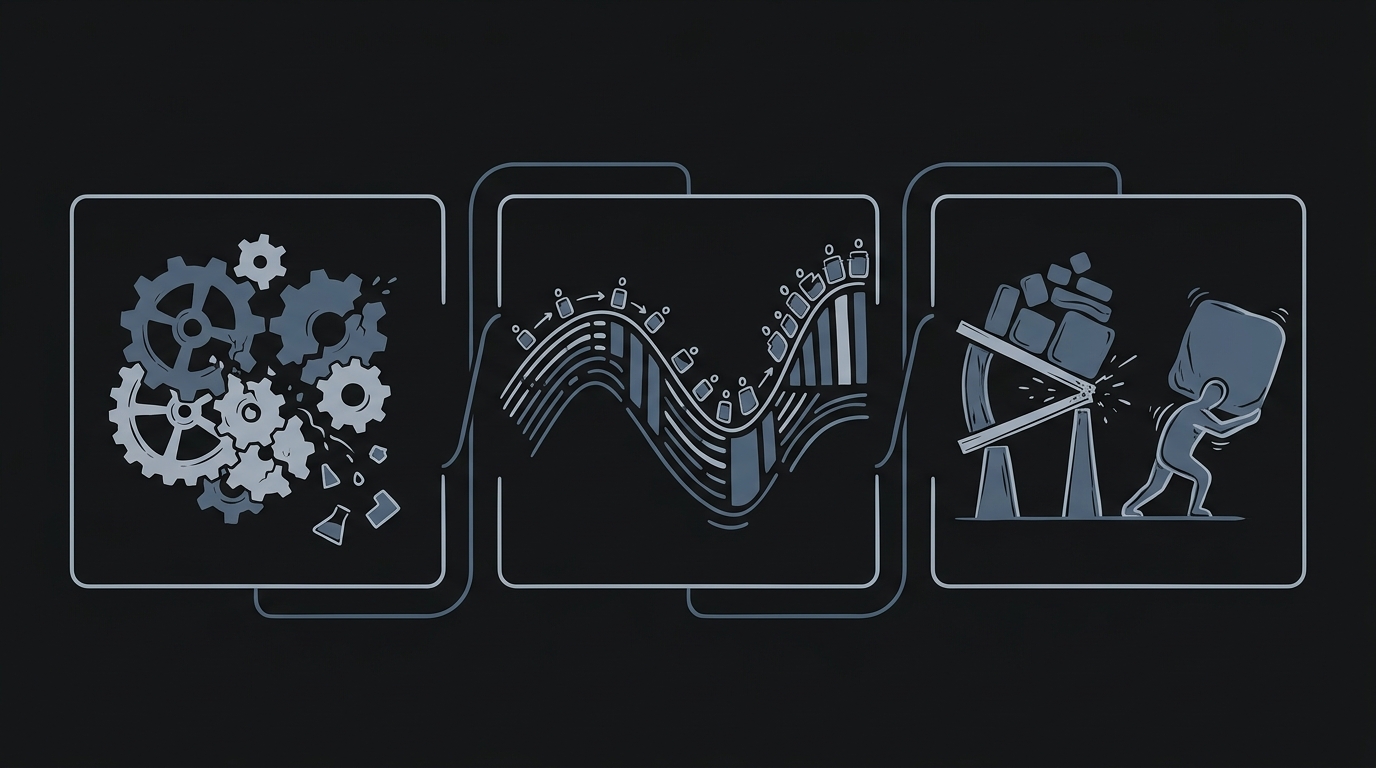
Mura: The Cancer of the System (Unevenness)
Mura refers to fluctuations, inequalities, and inconsistencies within a system. If your production line operates at 50% capacity on Monday but is forced to run at 150% capacity on Friday to meet targets, your system is suffering from Mura.
Why is Mura so dangerous? Because unpredictability destroys a system's ability to plan. An uneven workflow invariably causes bottlenecks or idle waiting times somewhere in the system. Where there is Mura, managers are forced to act reactively; their days are spent putting out fires rather than executing strategy. Mura is the absolute enemy of standardization.
Muri: Stretching to the Breaking Point (Overburden)
The unevenness created by Mura usually causes massive, momentary loads to fall on certain parts of the system. This condition is Muri. Muri is the act of forcing people or machines to work beyond their natural limits, physical boundaries, or mental capacities at an unnatural pace.
- Forcing employees to work long hours of overtime
- Loading machines beyond their rated capacity and leaving no time for maintenance
- Skipping quality control steps for the sake of fast delivery
The ultimate outcome of Muri is always burnout. The machine breaks down, the worker makes a mistake or gets injured. An overburdened system loses its elasticity and completely collapses under the slightest shock (such as a minor disruption in the supply chain).
Muda: The Visible Bleeding (Waste)
When Unevenness (Mura) and Overburden (Muri) accumulate in the system, the symptoms that surface are called Muda. Muda is anything that consumes time, resources, and money while adding absolutely no value to the customer.
The greatest mistake managers make is trying to eliminate Muda without first resolving Mura and Muri. For instance, if you are stockpiling inventory (Muda) because your system is uneven (Mura), abruptly reducing inventory to zero does not improve the system; it merely detonates the hidden crisis. Waste is the natural byproduct of a poorly managed system.
The path to operational excellence does not come from merely shaving off visible waste, but from eliminating the reason that waste exists in the first place by balancing the system (destroying Mura) and bringing capacity within reasonable limits (preventing Muri).