
The Visual Symphony of Silent Systems
In large factories or complex office operations, one of the most frequent phrases managers use is: "Can I get a report to see the current status?" If understanding the state of a process in an organization requires someone to pull data, prepare Excel spreadsheets, and present it in a meeting, that system is visually blind.
Kanban and Visual Control are the Toyota Production System's (TPS) method for curing this blindness. They are the neural networks that allow you to see the state of the system within the first three seconds of stepping onto the floor, without waiting for a report.
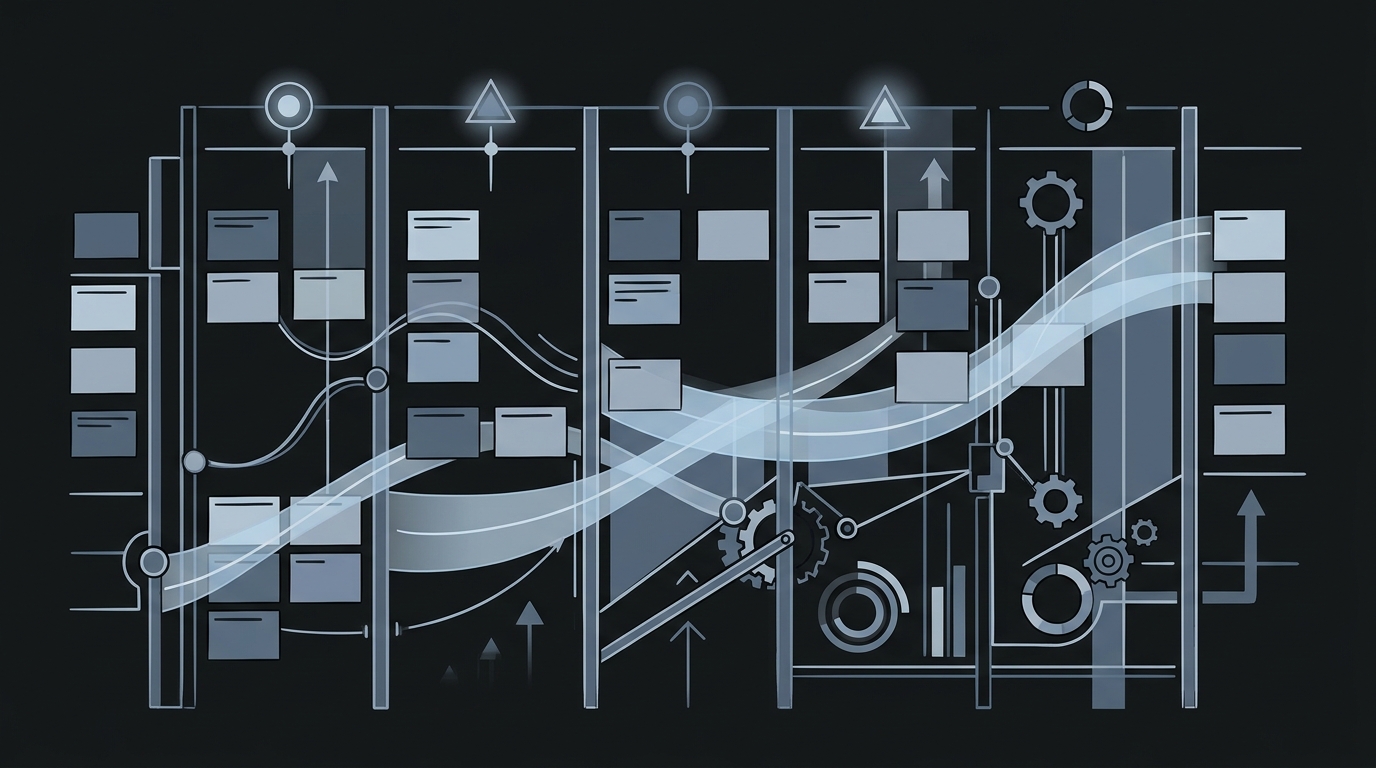
Transparentizing Information
The philosophy of visual control is simple yet radical: we should not need digital dashboards or managerial instructions to distinguish normal from abnormal. The process must instantly reveal its own state.
Shadow boards around tools, painted walkways on the floor, green/red status lights, or limited document trays in offices are not merely organizational tools. They represent the democratization of information. The rules and real-time health of the system become equally visible to everyone, from the most inexperienced worker to the highest-level executive. Hidden information is power, but in TPS, keeping information hidden (or trapped solely in reports) is waste.
Kanban: The Passport of Production
At the heart of visual control lies the Kanban system. Kanban (meaning "Visual Card" or "Signboard" in Japanese) is the signaling mechanism of the Pull system.
Every physical part or information packet moving through the system exists with an accompanying Kanban card. Kanban is a document of authorization. It details what the product is, where it comes from, where it goes, and how much needs to be produced. When a station pulls a part from the preceding process, the Kanban card for that part is freed up and returns to the previous station. This return is a strict order: "Produce exactly one more of this exact part to replace the one taken."
Without a Kanban card, production cannot occur, and parts cannot be moved. This rigid rule guarantees that no unauthorized effort is expended within the system.
Physically Preventing Overproduction
The greatest magic of Kanban is not that it transfers information, but that it imposes limits. The number of Kanban cards in the system (or column limits on digital Kanban boards) is pre-calculated. If you do not have an empty card in hand, you cannot produce—even if you have the materials and the time.
While traditional managers constantly issue new work orders to keep workers busy, the Kanban system physically locks down the amount of WIP (Work In Progress). The system cannot commit overproduction because the system's capacity and rhythm are hardware-chained to the number of Kanban cards in circulation.
Visual control and Kanban elevate management from an act of inspection and transform it into an autonomous architecture where the system manages itself.