
The Shock Absorber of the System
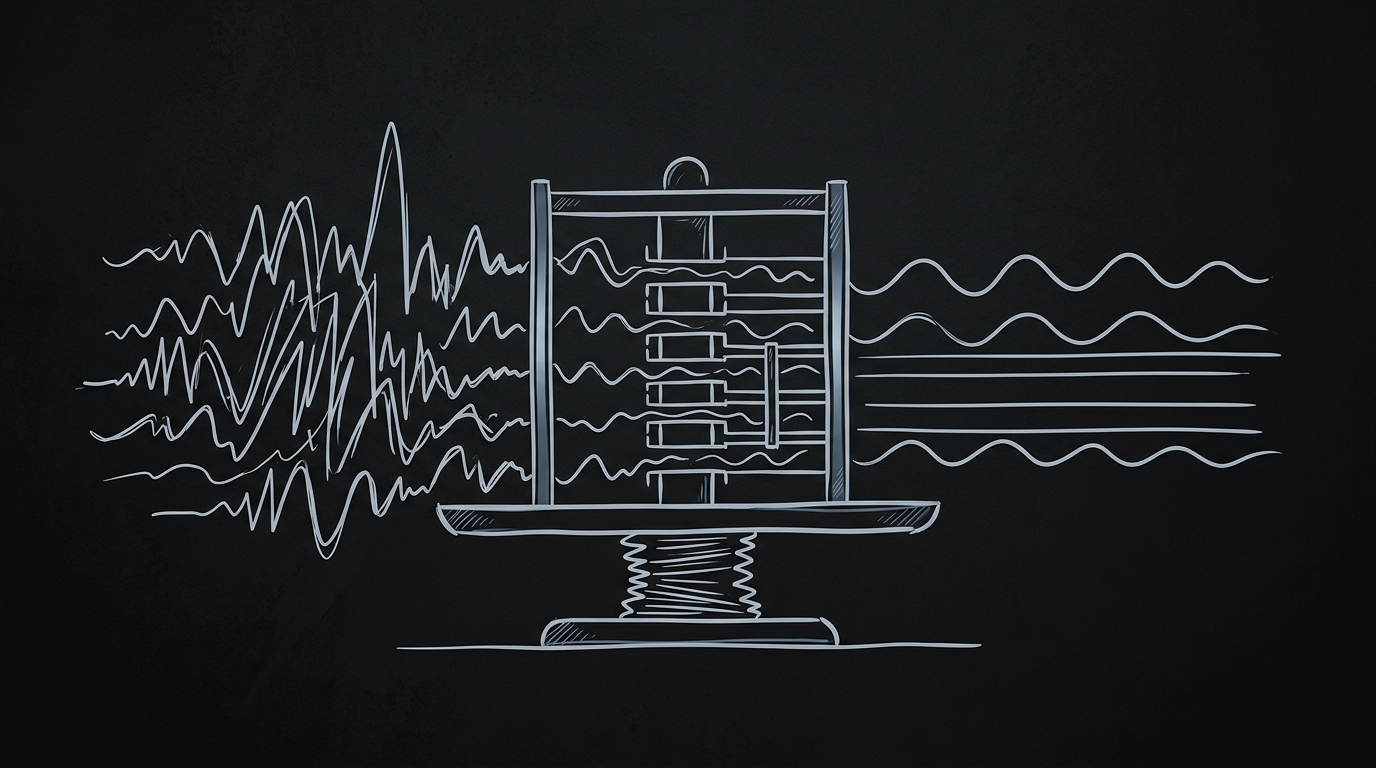
Fluctuation is the nature of disorder. Heijunka absorbs market chaos, creating a sanctuary of calm on the production floor. Like a dam swallowing the waves, this structure not only offers rhythmic tranquility to the system but also provides a structural sovereignty that guarantees the smooth flow of value.
Customer demands are never linear or docile. The market can be silent one day and attack aggressively the next. Traditional production systems are helpless against these fluctuations in customer demand; they try to protect themselves either by building massive mountains of inventory (Muda) or by drowning their employees in overtime, creating overburden (Muri). The result is the fatal fluctuation that gnaws at the heart of the system, namely "Mura."
If you want to protect your system from these random shockwaves, you need a suspension system, a mechanical shock absorber. Toyota's engineering response to this problem is "Heijunka" (Production Leveling).
Ironing Out the Fluctuation
Heijunka takes irregular orders coming into the factory (large batches and sudden spikes), breaks them down, and feeds them into the production line with a smooth rhythm spread over time (Takt Time). It operates not to the capricious rhythm of the customer, but to the healthy metronome of the factory.
For example, if you need to produce 100 red, 100 blue, and 100 black cars in a month, traditional logic (Batching) dictates: Press 100 reds first, don't change the paint guns, then press 100 blues. While this looks great for the paint shop, it creates massive shockwaves in the supply chain and assembly line.
Heijunka, on the other hand, breaks the order down into microscopic portions: It establishes a rhythm like "Red-Blue-Black, Red-Blue-Black..." This way, every part manufacturer knows exactly when to send which component, down to the second.
The Price of Flexibility: SMED
For Heijunka's philosophy of "leveling by volume and mix" to work on the floor, there is a single mechanical prerequisite: Setup Times must be close to zero. If it takes you hours to switch from a red car to a blue car, you cannot do Heijunka. This is why Toyota had to invent the SMED (Single-Minute Exchange of Die) technique to bring Heijunka to life.
By absorbing the destructive energy of order fluctuations, Heijunka is that invisible, silent balancer that calms the ground beneath the production line and makes Continuous Flow possible.
Comparison Matrix
| Feature | Traditional Production (Batching) | Heijunka (Leveled Flow) |
|---|---|---|
| Production Plan | Large batches | Small and mixed batches |
| Market Shocks | Destructive fluctuations | Absorbed and spread smoothly |
| Flexibility | Very low (Rigid pattern) | Very high (Adaptive) |
| Inventory Level | Peaks and valleys | Consistently minimal |