
Breathing to the Rhythm of Demand
There are fundamentally two ways to manage a production or information processing system: guessing what the customer will want and forcing the system accordingly (Push), or allowing the customer's demand to dictate the rhythm of the system (Pull). The Toyota Production System (TPS) found the key to excellence in abandoning forecasting and reacting to reality (customer demand).
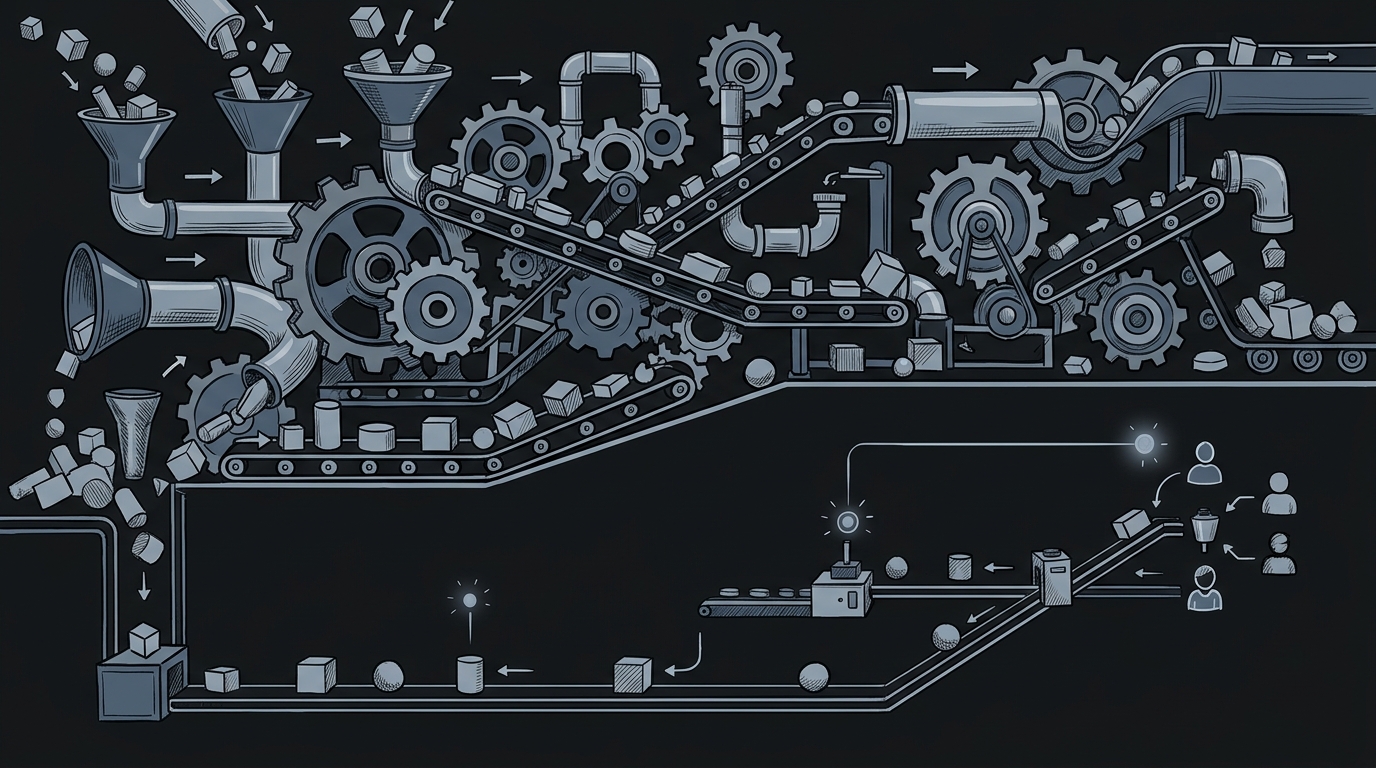
The Chaos of the Push System
Almost all traditional companies operate on a "Push" logic. This system begins with a centralized planning department predicting the future (usually via ERP algorithms and historical sales data). Based on these orders, raw materials are purchased, production begins, and finished goods are piled into warehouses.
The fundamental philosophy of the push system is "Keep machines and workers busy." However, this system has a massive blind spot: the future is unpredictable. Everything produced without customer demand turns into massive waste (Overproduction and Inventory). The system is in a constant state of frenzy. When inaccurate forecasts are made, schedules are upended for rush orders, and "putting out fires" becomes the primary duty of managers. A push system transforms a factory or office into a massive assumption machine.
The Harmony of the Pull System
The Pull system completely reverses the process. The production order does not come from the planning department, but directly from the customer. It works exactly like a supermarket shelf: when a customer takes a product from the shelf, this action sends a direct signal to the previous stage (the warehouse) to "fill the empty space on the shelf." The warehouse then requests production from the factory for the vacated space. The factory produces only when the warehouse requests it.
If the customer demands nothing, the system produces nothing. It stops. For most managers, idle machines and workers are a nightmare. Yet in TPS, it is far more profitable and healthy for the system to stop than to produce something the customer has not paid for.
Reclaiming Control
Transitioning to a pull system is not just an operational tactic, but a psychological revolution.
- It requires abandoning the arrogance of centralized planning and submitting to the realities of the shop floor.
- It eliminates the Bullwhip Effect. Because each station produces only what the next station (its internal customer) requests, exactly when and in the amount requested.
- Because it removes the excessive inventory cushions in the system, it immediately brings quality issues and bottlenecks to the surface. This is painful, but improvement (Kaizen) can only begin when problems are visible.
A push system is chaos managed by assumptions; a pull system is flow managed by reality.