
The Design that Makes Failure Impossible
Human beings get tired, become distracted, and make mistakes. When an error occurs, traditional management often blames the employee, tells them to "be more careful," or adds unnecessary layers of approval and inspection (Muda) to the process. The Toyota Production System (TPS), however, views the human potential for error not as a weakness, but as a design problem.
The intelligence that solves this design problem is the concept of Poka Yoke (Mistake-Proofing), formulated by Shigeo Shingo.
Making it Impossible, Not Just Warning
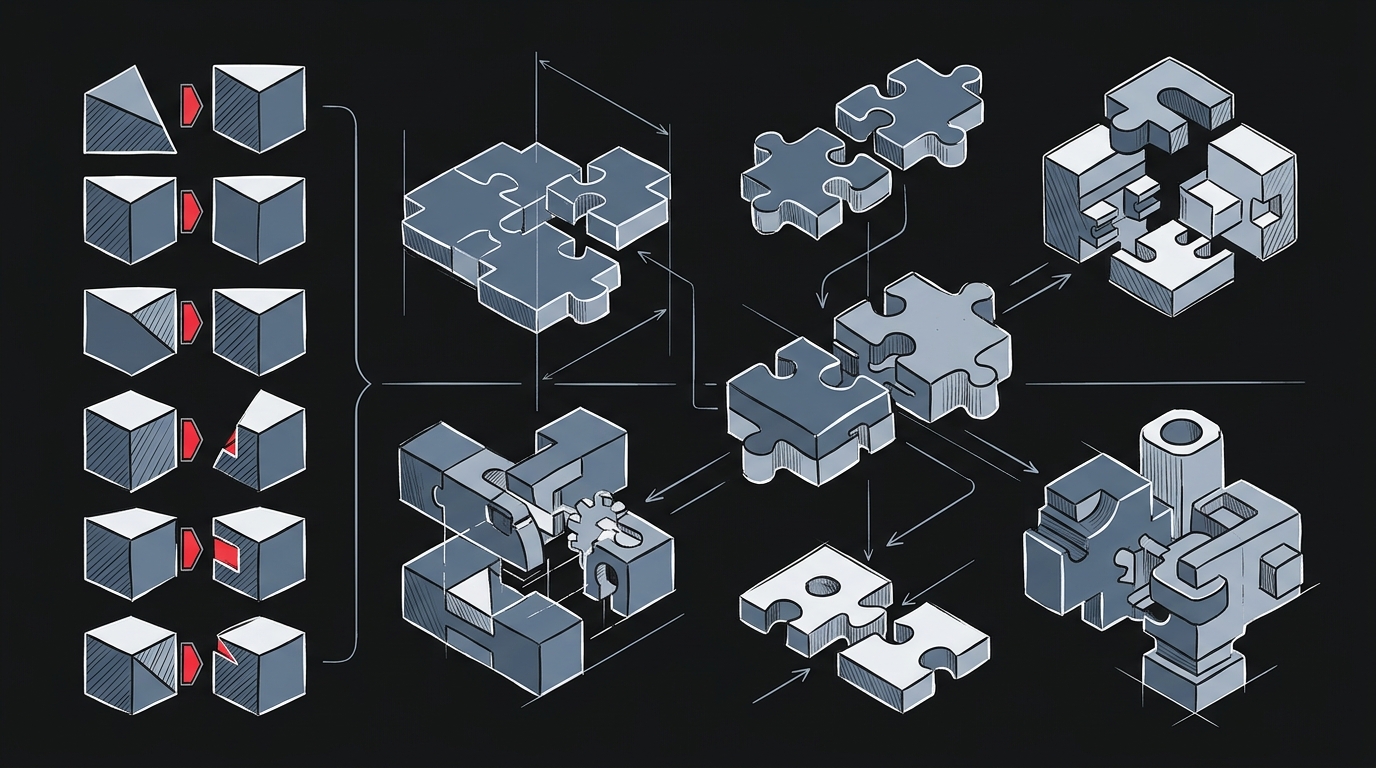
Poka Yoke is a set of mechanisms that makes doing a task incorrectly "physically impossible" through hardware, geometry, or software. Many companies mistake warning signs, labels, or written instructions for Poka Yoke. However, signs only warn; they do not prevent. A true Poka Yoke will not allow the operator to insert a part backward or skip a step, no matter how careless they might be.
- Geometric Poka Yoke: The fact that SIM cards or USB flash drives have one angled corner prevents you from inserting them backward, even if you try.
- Sensory Poka Yoke: A microwave oven refusing to run while the door is open, or a "Submit" button remaining inactive until a mandatory field in a form is filled out, are examples of software and sensory mistake-proofing.
The Levels of Poka Yoke
A perfect Poka Yoke design prevents the error from occurring in the process before it even manifests. However, if this is not always possible, the Poka Yoke steps in and halts the process (the Jidoka principle).
- Preventive Poka Yoke (Control Method): It makes the occurrence of an error physically impossible from the very beginning. All conditions must be correct for the operation to take place. This is the most ideal and highly targeted level.
- Warning Poka Yoke (Warning Method): The moment a mistake is made, it stops the system from advancing and triggers a visual/auditory alarm, forcing operator intervention. The mistake was made, but it was prevented from passing to the next stage of the system.
The Psychology of Design
Poka Yoke has a massive impact on organizational psychology. It eliminates the fear of making mistakes (Psychological Safety). When an employee knows that the machine or software will protect them from a wrong move, they use their energy to create value, not to manage stress.
Furthermore, Poka Yokes do not have to be complex technological investments. Usually, the best Poka Yoke mechanisms in a factory are not developed by engineers, but by the shop-floor workers who experience the difficulty and probability of error every single day, often using a simple plastic piece or a guide pin (Kaizen). Intelligence lies not in complexity, but in simplicity.