
Injecting Human Intelligence into Machines
Traditional automation is built upon a machine's ability to operate continuously without requiring human physical labor. However, this is blind production. If a drill bit inside the machine breaks, the machine will continue producing defective parts for hours. No one notices the problem until hundreds of flawed products are piled up. Automation merely accelerates the work, carrying the severe risk of accelerating poor quality as well.
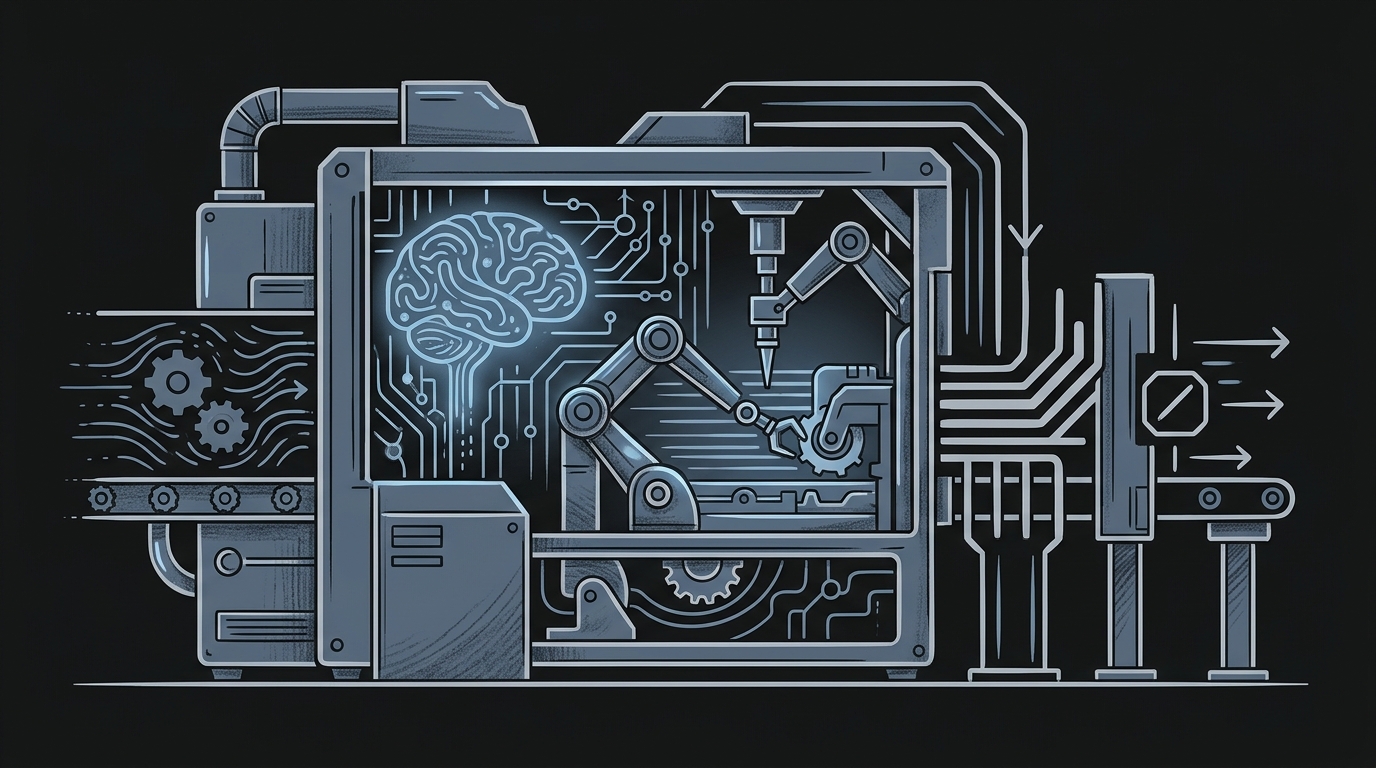
The concept of "Jidoka" (Autonomation), developed by Sakichi Toyoda when he invented the automatic loom, eliminates this blindness. Jidoka is the act of imparting "human intelligence" to machines.
Teaching the Machine to "Stop"
The fundamental philosophy of Autonomation (Jidoka) is this: While producing, the machine must simultaneously inspect the quality of its own work and, the instant it senses an abnormal condition (e.g., a thread breaking, a part jamming, or an incorrect measurement), it must automatically stop.
Why is this a revolutionary idea?
- It Liberates the Human: In a classical system, a worker must stand as a "guard" at the machine just to make sure it doesn't make a mistake. The machine works, the human watches. In a Jidoka system, the machine inspects itself. The human only intervenes when the machine stops and calls for help. Because of this, an operator can manage multiple machines simultaneously (for value-adding work) rather than waiting on just one.
- It Eradicates the Error at the Source: The defect does not pass to the next station. Piles of defective products (Overproduction and Defect wastes) are never created. The problem is isolated within milliseconds.
The Bankruptcy of the Quality Control Department
Traditional companies establish a massive "Quality Control (QC)" department at the end of the production line to catch errors. However, quality control is inherently a non-value-added operation (Waste). The mistake has already been made; the money has already been spent. All the QC department does is sort out the garbage before it reaches the customer.
Jidoka aims not to inspect quality at the end of the process, but to build quality into the process (Built-In Quality). Our goal is not to train good inspectors who catch defective products, but to design mechanisms (hardware or software) that make it physically impossible for the machine to make a mistake.
If your process is designed with Jidoka principles, the only function of your quality control department becomes auditing whether the process is still operating according to Jidoka rules. Sorting out errors is the job of machines; solving problems at their root is the job of humans.