
The Mathematical Order Within Chaos
In most companies, managers make decisions based on their "feelings" (gut feeling) or "experience." When a machine breaks down three days in a row or sales drop 5% in a month, winds of panic blow in the meeting room; everyone blames each other. However, Statistical Process Control (SPC) and the Six Sigma methodology teach managers this: "In God we trust, all others must bring data."
SPC is the science of mathematically distinguishing whether events within a company are a "random fluctuation" (Common Cause Variation) or the harbinger of a systemic crisis (Special Cause Variation).
Variation: The Archenemy of Quality
Two products coming off a production line, two customer calls in a call center, or the delivery times of two shipped packages can never be exactly (at a microscopic level) the same. There is a natural variability (Variation) in every process in the universe.
The customer does not expect the average quality of the product, but for it to be consistent every time. What makes McDonald's the largest restaurant chain in the world is not that its french fries are "the most delicious fries in the world," but that they taste "exactly the same" in Tokyo, New York, and Istanbul (Low Variation). The goal of Six Sigma and SPC is not to raise the average; it is to narrow this variability in the process down to (3.4 defects per million - Six Sigma level).
Control Charts
The greatest tool that prevents managers from panicking is Control Charts.
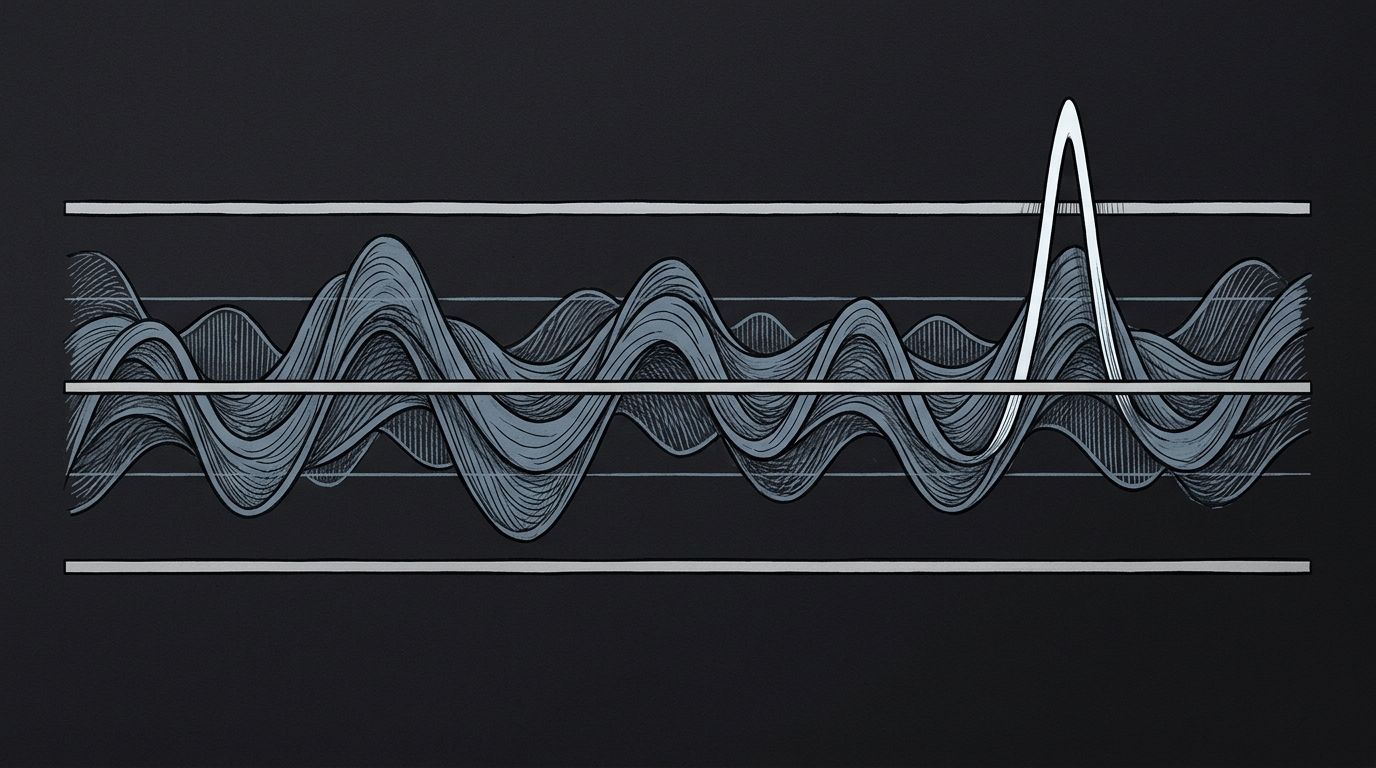
An Upper Control Limit (UCL) and a Lower Control Limit (LCL) are drawn around the average performance (Center Line) of a process.
- Common Causes: If the data bounces randomly between these two limits, this is the "natural noise" of the system (Noise). You should not intervene with the machine; if you try to fix it (Over-tampering), you will mess up the system even more.
- Special Causes: If the data goes outside these limits (or if 7 points in a row appear on the same side of the average), this is a "Signal." Something statistically impossible has happened; a tool has broken, the raw material has changed, or the calibration is off. This is exactly the moment you need to stop the machine (Jidoka) and intervene.
SPC is a radar that allows the manager to read the difference between "Noise" and "Signal".