
The Mechanical Heart of Infinite Improvement
The day you establish a management system and obtain a certificate, you have actually reached the starting line, not the finish line. Many companies, after setting up the system, declare it untouchable like a museum artifact and freeze it. However, the world's technology, customer expectations, and competitors' moves are constantly changing.
No static (stationary) system can survive. At the heart of ISO standards lies a mathematical engine that constantly drives the system forward and keeps it alive: the PDCA (Plan-Do-Check-Act) cycle.
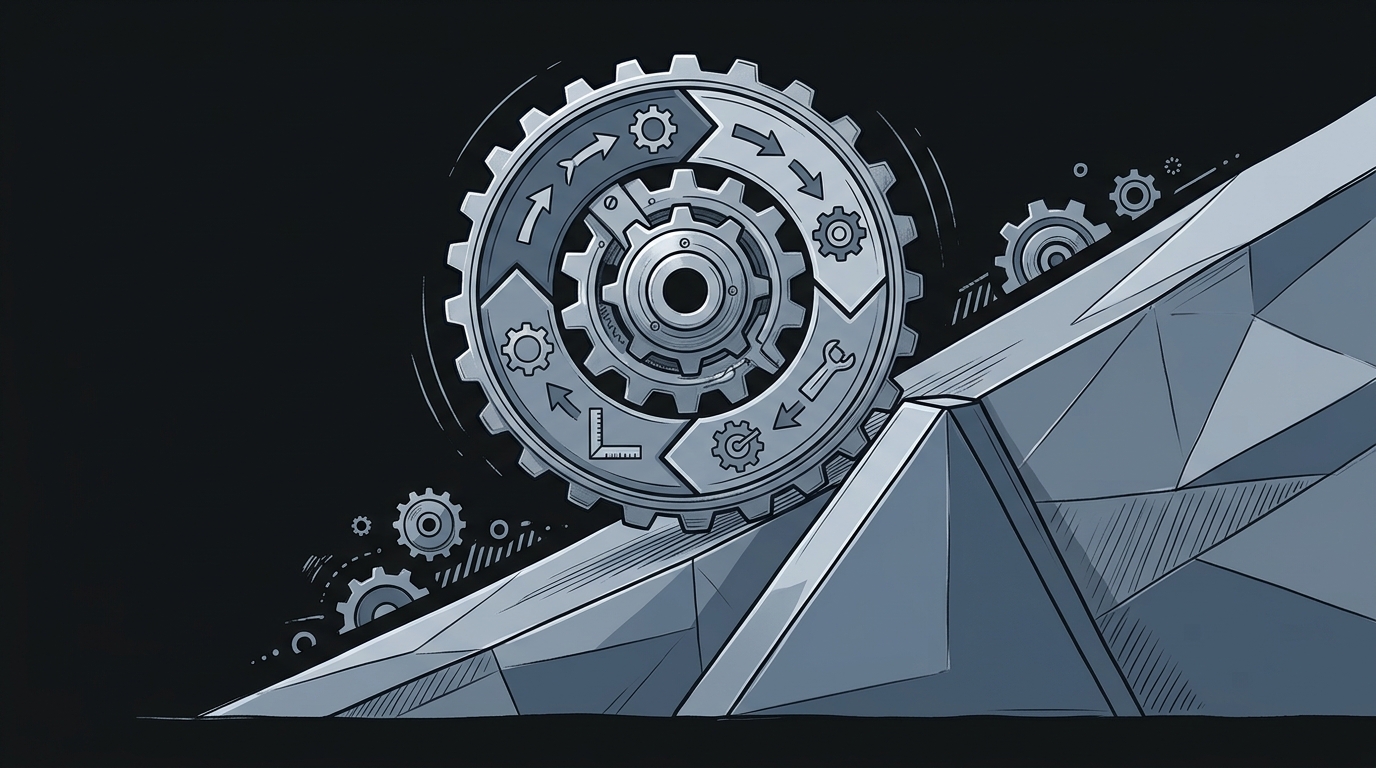
The Deming Cycle: The Formula for Continuous Evolution
Popularized by the quality guru W. Edwards Deming, the PDCA cycle is directly integrated into the 10-clause structure of management standards (Annex SL). This cycle is the adaptation of the fundamental scientific method of hypothesizing and testing to company management.
This four-stage engine works as follows:
- Plan (Clause 6): "Where are we going, and what do we need to get there?" Merely setting a target (increase sales by 10%) is not planning; it is mathematically designing the path to the target, the risks, and the resources.
- Do (Clause 7 ve 8): This is the stage of executing the paper plan on the shop floor (Gemba). Support processes (human resources, infrastructure) and operational tasks are carried out as planned. Standardized Work comes into play here.
- Check (Clause 9): "Did it really work?" This is the stage where performance metrics are monitored, internal audits are conducted, and whether the execution aligns with the plan is impartially measured. Traditional companies often skip this step.
- Act (Clause 10): If deviations were found during the check stage, the system is improved through corrective actions (Root Cause Analysis). If the system is running perfectly, this newly achieved level of success is documented as the "new standard," the target is raised, and the cycle is restarted.
The Uphill Movement of PDCA
PDCA is not a wheel rolling on flat ground; it is a wheel being pushed uphill. If the PDCA cycle stops for a moment, the wheel will succumb to gravity (organizational inertia and chaos) and roll backward.
The only wedge that ensures the obtained improvements are permanent (preventing the wheel from rolling back) is "Standardization". That is why the PDCA cycle always goes hand in hand with the SDCA (Standardize-Do-Check-Act) cycle. Continuous development (Kaizen) is the PDCA engine turning uphill without ever stopping.