
Facing the Bare Truth in the Mirror
There is always a chasm between things looking perfect on paper in a company and them actually running perfectly on the shop floor. Managers generally want to believe that the system they set up works flawlessly. However, reality goes through many filters and is softened before it reaches the manager's desk.
Internal Audit, located in Clause 9 (Performance Evaluation) of the ISO standards, is an early warning system where the company holds a mirror up to itself, shatters illusions, and diagnoses its own vulnerabilities before an external auditor (certification body or customer) arrives.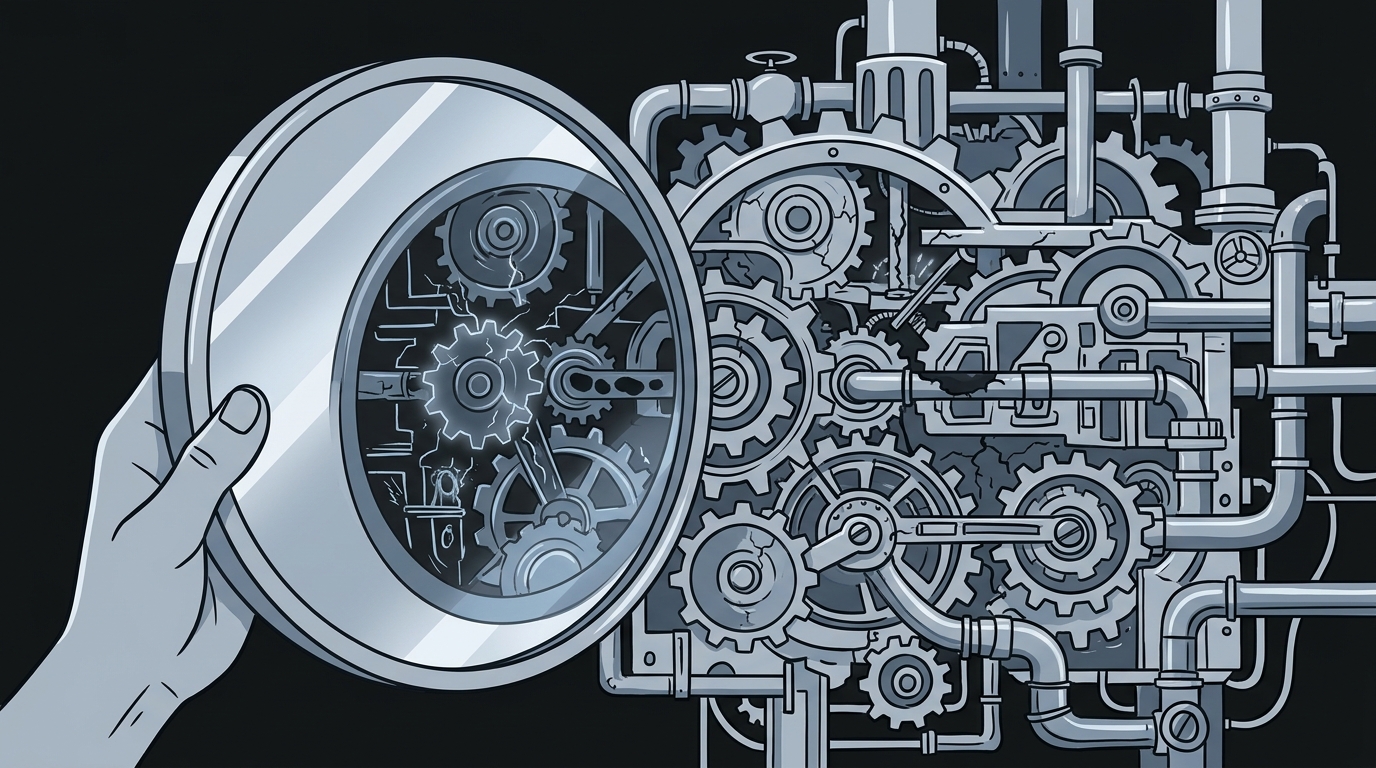
Auditing is Not Policing
In traditional corporate culture, internal auditing is seen as a ritual of "fault-finding," "witch-hunting," and "punishing people." When the auditor approaches, employees panic, truths are hidden, and only what the auditor wants to hear is said. This "Policing" approach is the most toxic disease that undermines the management system.
In modern management systems (and in the TPS philosophy), the purpose of an internal audit is not to find "Who is at fault," but to find "Where the system is falling short." If an employee is not following a procedure, a modern auditor asks: "Is the procedure too complex?", "Did the employee not receive adequate training?", "Are the tools used insufficient?"
Internal auditing judges processes, not people. The auditor's job is not to corner the employee, but to put those invisible obstacles (Muda) that prevent the employee from doing their job correctly in front of top management.
Independence and Objectivity
The most fundamental rule of an effective internal audit is "Independence." A person cannot objectively audit their own work (Blindness). Therefore, the production manager does not audit production; they audit the logistics department, for example. Cross-Auditing breaks down the "Silo" mentality in the company; it allows departments to understand each other's processes and see the company as a whole (The Big Picture).
An internal audit mechanism that is conducted regularly and produces honest findings is the very heart of the "Check" phase of the PDCA cycle. If your internal audits always result in "Zero nonconformities," it doesn't mean you are perfect; it means your audit system is blind.