
The Steel Armor of Human Life
The "Safety First" signs hanging on company walls often give way to the reality of "Production First" during the very first production crisis (for example, when needing to rush a delayed order). However, a management mindset that views occupational health and safety as a "cost" or a "burden" ultimately gambles with workers' lives and risks the company's existence with massive compensation claims and closure threats.
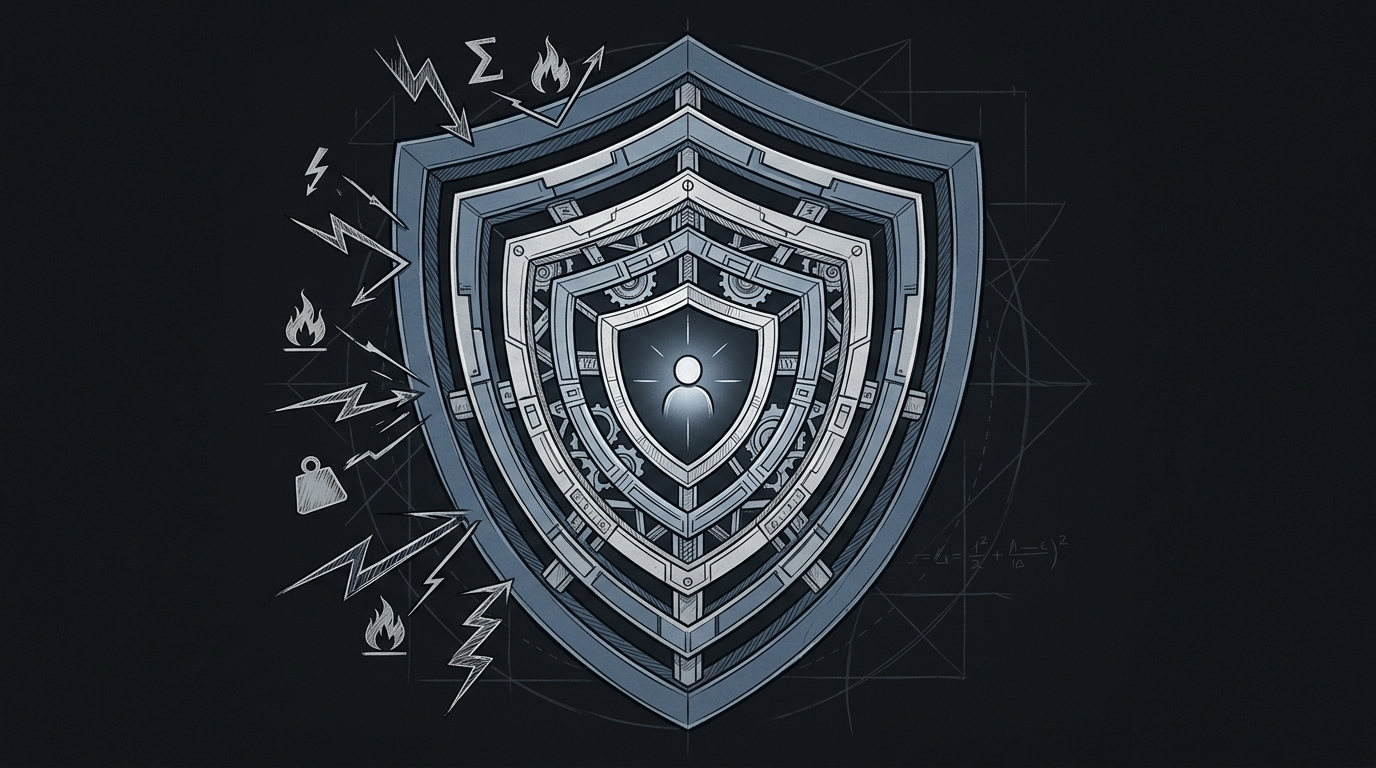
ISO 45001 is a safety shield that takes occupational safety down from the signs and embeds it into the DNA of operations, turning the goal of zero accidents from a matter of coincidental luck into an engineered design.
Proactive Approach: Seeing the Accident Before It Happens
Traditional occupational safety is reactive: Someone falls, a barrier is built in that area. Someone is poisoned, masks are distributed. ISO 45001, however, builds a proactive model.
The accident pyramid (Heinrich's Triangle) tells us this: Beneath every 1 fatal accident lie hundreds of "Near-Misses" and thousands of unsafe acts. The "Risk-Based Thinking" in quality systems saves lives here. An open culture must be created where workers are encouraged to report an unsafe condition (e.g., a slippery floor or a saw with its guard removed), and these reports are viewed not as "snitching" but as "opportunities for improvement."
As invisible risks (Near-Misses) are identified and solved through the PDCA (Plan-Do-Check-Act) cycle, the base of the pyramid is destroyed, and the probability of the fatal accident at the top is mathematically reduced to zero.
Hierarchy of Controls
When a risk is identified, there is an order of quality for the measures to be taken. To solve a risk, most companies give the worker a Hardhat or Gloves (Personal Protective Equipment - PPE) and think the job is done. However, PPE is the weakest measure an engineer can apply.
The Hierarchy of Controls works from top to bottom as follows:
- Elimination: Completely removing the hazard (Not using the toxic chemical at all). This is the strongest measure.
- Substitution: Replacing the hazardous with the less hazardous (Using a water-based alternative instead of a toxic chemical).
- Engineering Controls: Placing physical barriers between the human and the hazard (Installing a sensor that cuts off electricity when the machine cover is opened - Poka Yoke).
- Administrative Controls: Establishing rules and rotations.
- Personal Protective Equipment (PPE): The last resort (Wearing masks, hardhats).
The safety shield is not about leaving the worker at the mercy of the hazard (hoping they will be careful), but about designing the system to forgive mistakes.