
The Silent Mark Left on the Planet
For many years, factories viewed the smoke billowing from their chimneys as a "symbol of production" and their wastewater as a minor detail that nature could handle. Environmental management was merely a procedure the environmental manager dealt with just to avoid legal fines. Today, however, we see that an environmentally insensitive company faces not only fines, but customer boycotts, withdrawal of investors, and a refusal by the new generation of talent to work for that company.
ISO 14001 (Environmental Management System) transforms environmental protection from a legal obligation into a strategic armor that protects the company's reputation and long-term existence (Sustainability).
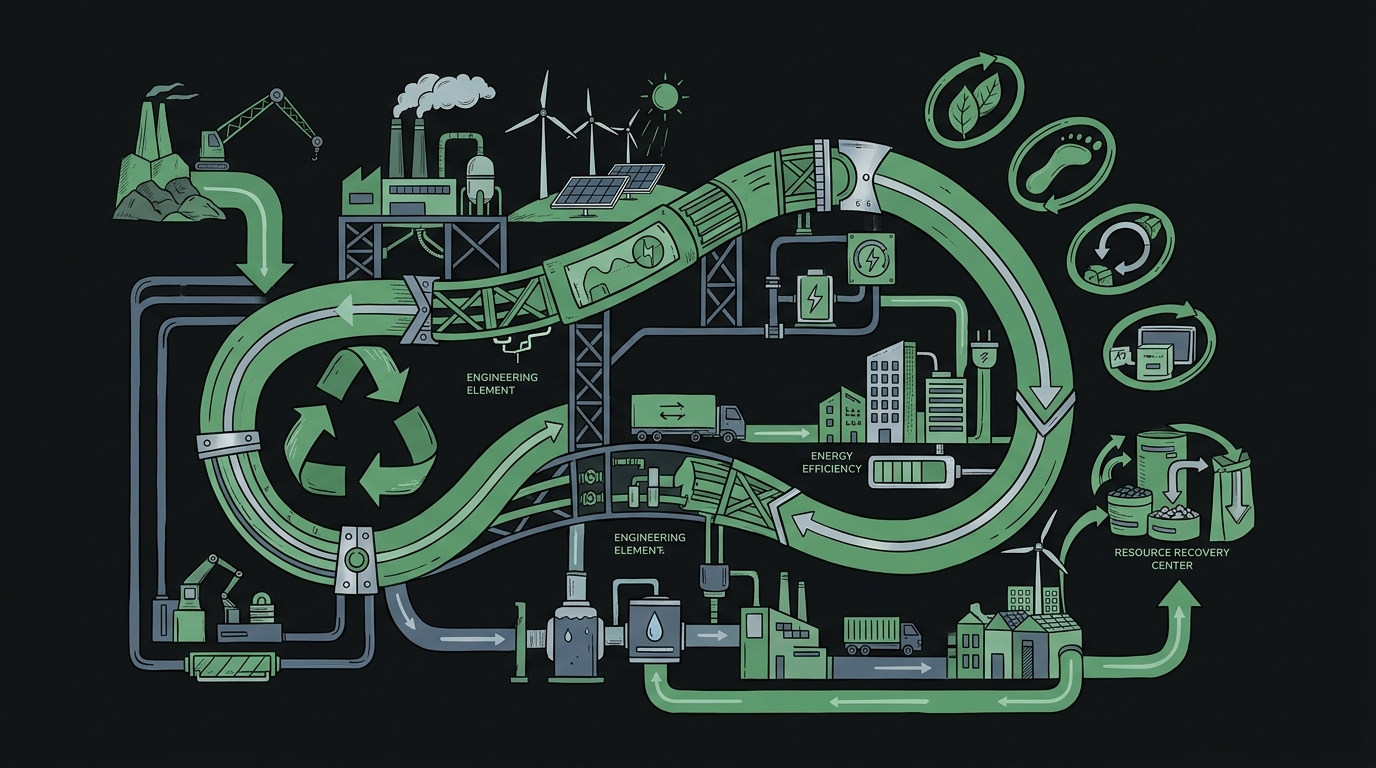
Life Cycle Perspective
Traditional companies limit their environmental impact solely to what happens within their factory gates. ISO 14001, on the other hand, mandates a Life Cycle Perspective. This is the acknowledgment that the story of the product does not begin and end in the factory.
If the product you manufacture is produced with 100% eco-friendly processes in the factory, but due to its design, it does not decompose for centuries when thrown away, or if your customer consumes massive amounts of electricity while using it, you are not an eco-friendly company. The entire journey, extending from the extraction of raw materials from the mine (Supply chain) to the useful life of the product and ultimately its recycling (End-of-Life), is your environmental footprint.
From Waste Management to Resource Optimization
The biggest myth of the Environmental Management System is the belief that it "only creates expenses." Yet, the root cause of environmental damage is the waste of resources (energy, water, raw materials).
ISO 14001 aims not to filter waste, but to eliminate waste from the very beginning (in design and process). A motor design that consumes less energy not only reduces carbon emissions; it also shrinks the electricity bill. A closed-loop system that filters wastewater and recovers it back into the system protects the river while zeroing out the company's water costs. Modern environmentalism (Green Engineering) is a mathematical process optimization that reduces costs while protecting nature.