The Seesaw of Global Capital
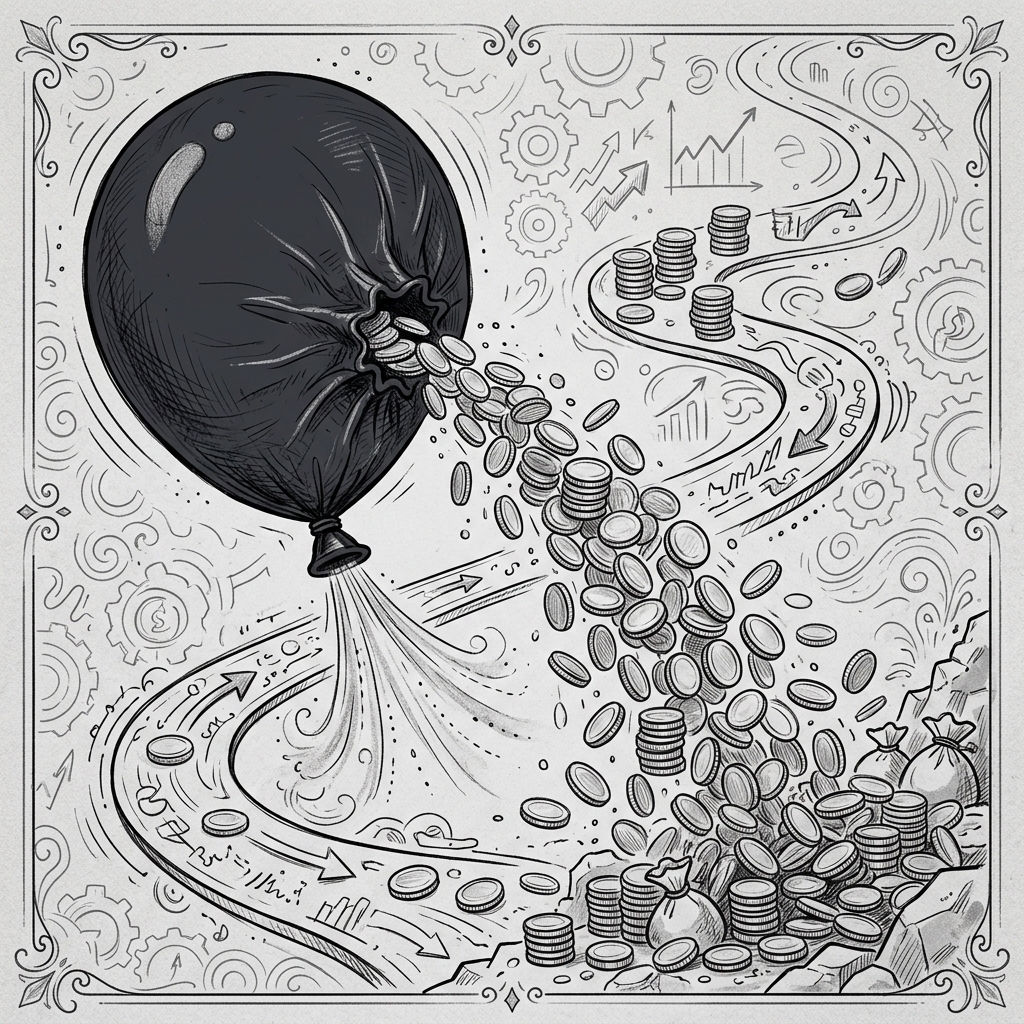
Money always flows toward yield; interest rates create an invisible gravity, pulling all capital toward their center.
The Foundations of International Value Exchange
The foreign exchange market, or Forex, is a massive, continuous global bazaar where the value of all currencies is determined against one another. This market acts as a real-time scoreboard reflecting the economic health, production power, and financial decisions of nations. A currency's value means nothing in isolation; its worth is always established relative to another currency.
What is a Currency and How is Value Formed?
We can think of a country's currency as a giant stock representing the overall economic health of that nation. If a country exports heavily, produces consistently, and sells value to the world, the demand for its currency rises. As demand increases—just like the price of a highly sought-after product—that country's currency appreciates against others. However, when interest rates enter the equation, this mechanism binds to a much stronger mathematical rule.
Interest Rate Parity and Gravitational Pull
Interest Rate Parity is the fundamental law of physics that explains how global capital moves between nations. Capital is like a fluid; just as water always flows to the lowest point, money always seeks the highest, risk-free yield.The Seesaw Mechanics: Weight and Balance
Imagine the currencies of different countries as the two ends of a massive seesaw. A country's interest rate is like a heavy gold ingot placed on that seesaw. When a country raises its interest rate (increases its weight), its end of the seesaw crashes downward (the currency appreciates) and lifts the other country's currency into the air (the other currency depreciates).
A country offering high interest rates broadcasts a message to global investors: "Bring your money to me, and I will give you a higher guaranteed return." Billions of dollars in funds immediately start buying that country's currency. This massive purchasing demand rapidly pulls the currency's value up. Capital flow is the constant balancing act upon this seesaw.
Currency Risk and Hedging in Global Trade
In this seesaw world where currency values fluctuate by the second, companies engaged in international trade face severe financial risks. This is known as FX Risk (Foreign Exchange Risk).
The Nightmare of the Exporter and Importer
When an exporting company sells products abroad, it might receive payment in a foreign currency six months later. If that currency depreciates within those six months, the company's entire profit margin can melt away in the fluctuation. Similarly, an importing company faces the risk of bankruptcy even before receiving the product if the currency it owes suddenly skyrockets against its own.
Hedging Strategies to Manage FX Risk
Successful corporations do not leave their fate to chance in this seesaw game. Companies utilize Hedging mechanisms to eliminate future uncertainty. A firm signs agreements (Forward Contracts) with banks today to buy or sell currency at a predetermined price in the future. Consequently, no matter how violently the seesaw swings, the figure that will reflect on the company's balance sheet is locked in and finalized today.