
Unlocking the Gates of Capital
The democratization of ownership is not merely the act of accumulating new capital; it is a company surrendering its entire future to the ruthless transparency of the market and the collective judgment of the crowd.
One of the most profound transformational moments in global financial markets is when an enterprise strips away its private ownership structure and opens its doors to the world. This revolutionary mechanism, utilized by companies to transcend their growth limits and finance massive operations, constitutes a cornerstone of financial engineering.
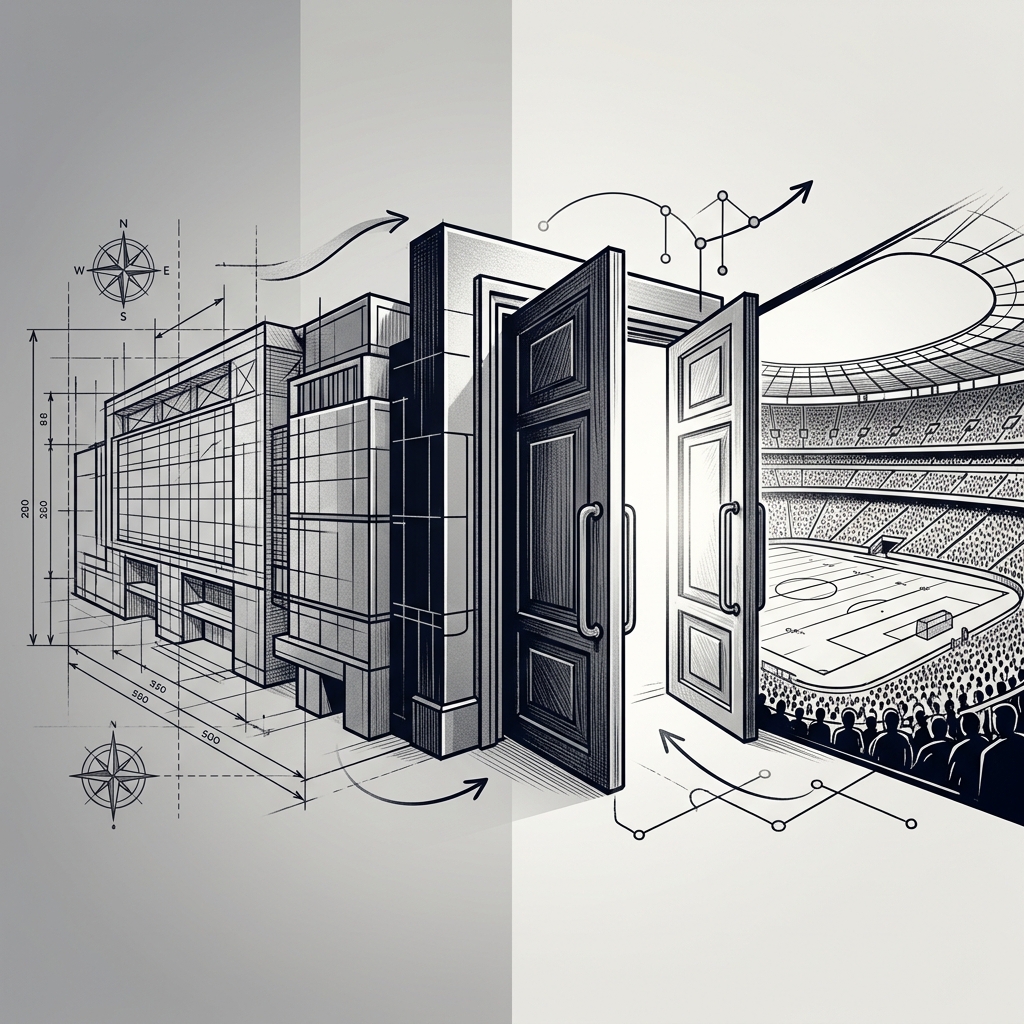
We can think of a private company as a highly exclusive, ultra-luxurious VIP club where only the founders and a very small number of angel investors are allowed entry, where rules are secretly established inside, and no outsider can precisely see what is happening. An Initial Public Offering (IPO) is the act of tearing down the high walls of this club and opening its doors completely to the street. Now, anyone with money in their pocket can buy a small entry ticket (a share of stock) and become one of the co-owners of the club. However, when the doors are opened, all the internal ledgers are also laid bare for the inspection of everyone in the public square.
The Fundamental Nature of Going Public
An Initial Public Offering (IPO) of a company is the process by which a previously unlisted corporate entity offers its shares to the general public for trading for the first time. This transaction is the most critical threshold in a company's life cycle. The decision is not just a shift in financial statements, but an entire architectural reconstruction of the corporate identity from the ground up.
The Mathematical Necessity of Growth
Companies require colossal amounts of cash to grow, build new manufacturing plants, expand their technological infrastructure, or acquire competitors. Taking this cash from banks as debt (loans) imposes a heavy interest burden on the company's balance sheet. Even if the company fails to generate a profit, it is strictly obligated to pay this interest. However, the capital raised through an IPO is not debt. The company sells a portion of its ownership to investors, and in return for this massive influx of cash, it provides no guarantee of interest or repayment. This radical shift in the capital structure grants the company immense flexibility and tremendous growth velocity.
Liquidity and The Exit Strategy
Founders and early-stage (startup) investors have tied up their money and labor in the company for years. Yet, as long as the company remains private, it is extraordinarily difficult for them to convert this massive paper value into cold cash; there is simply no open market to sell these shares. The IPO releases this locked value. The moment a company is listed on an exchange, founders can sell their shares in an open market bustling with millions of buyers in mere seconds, transforming years of effort into actual liquid wealth.
The Actors and Mechanics of the IPO Process
This colossal transition is not an operation a company can execute in isolation. The financial system has constructed extremely tight security protocols and intermediary institutions to ensure this process operates smoothly and securely.
The Critical Role of Underwriters
Investment Banks are the brains and the engines of the IPO process. When a company decides to go public, these banks lead the operation. They calculate the company's valuation and determine how many shares will be sold at what price. We can think of this operation as engineers (investment banks) thoroughly testing the watertight integrity and charting the course of a giant ship (the company) before it is launched into the volatile ocean. Investment banks usually take on significant risk through "underwriting"; meaning they guarantee to pay the company that capital even if the public fails to buy the shares.
Transparency and Regulatory Armor
The greatest cost of the IPO process is the complete forfeiture of corporate secrecy. At the genesis of the process, a deeply detailed document spanning hundreds of pages, known as the S-1, is submitted to regulatory bodies (such as the SEC in the United States). This document contains every possible detail, from the salaries of executives and the most concealed operational risks, to pending lawsuits and manufacturing costs. A company that enters the public domain is subsequently compelled to broadcast its financial x-ray to the world every quarter and remain strictly accountable to thousands of shareholders.
SPACs: The Backdoor to the Public Market
The traditional IPO process is an exceptionally protracted (sometimes taking months or years), expensive, and heavily bureaucratic path. The financial ecosystem invented the Special Purpose Acquisition Companies (SPAC) model as an alternative to this cumbersome structure.
The Logic Behind Blank Check Companies
A SPAC is a "shell" company that has absolutely no commercial operations, factories, or products of its own. Its founders raise capital from investors relying purely on their vision and reputation, and they take this empty company public through traditional methods. Investors essentially invest in a "blank check," knowing that this capital will be used to acquire a real, yet-to-be-determined company in the future.
A SPAC acts like a master key (or an accelerator) that forcibly opens the backdoor of the exclusive club. A private company that wishes to go public but seeks to evade the protracted IPO process simply merges with this empty, already publicly traded SPAC. At the exact moment of the merger, the private company seamlessly slips into the shell of the SPAC, instantly transforming into a publicly traded entity on the exchange.
Speed and Pricing Certainty
The paramount advantage of the SPAC method is speed and absolute certainty. In a traditional IPO process, the company's share price is determined on the final day based on the instantaneous reaction of the market, which poses a substantial risk. In the SPAC method, the moment the private company and the SPAC managers agree on a valuation behind closed doors, the price is irrevocably locked. However, because this velocity inherently implies far less regulatory scrutiny, it carries a substantially higher risk of transparency failures for the investors. Just as a rapidly moving vehicle has a much higher risk of crashing compared to a slow, heavily controlled convoy, SPAC mergers also possess deep structural vulnerabilities.