The Anatomy of Ownership and Fractional Capital
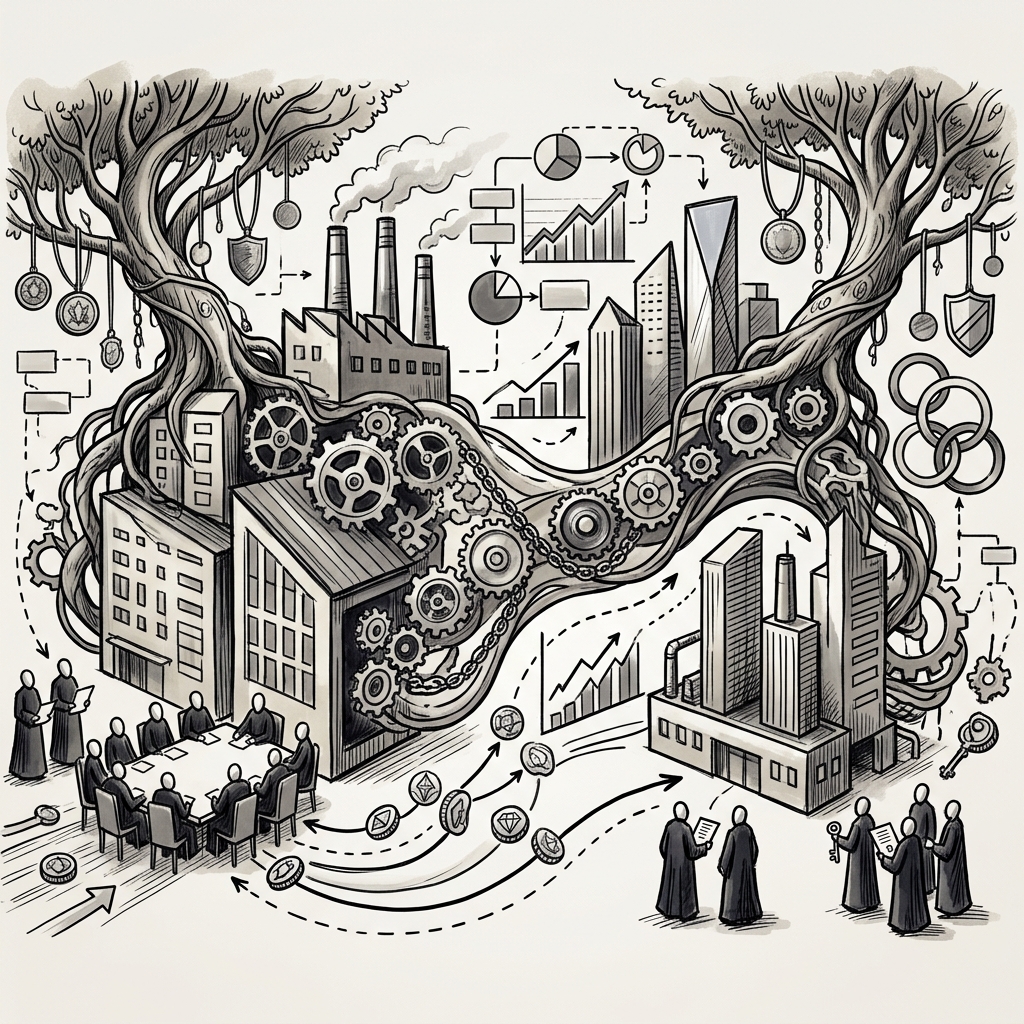
Ownership is not a solid concrete block; it is an organic and dynamic architecture where thousands of individuals share the same foundation.
In the global business landscape, companies require astronomical amounts of capital to achieve massive goals. No single founder can carry this financial weight forever. This is where the most fundamental building block of financial architecture comes into play: Equities or Shares. A share of stock is not just a piece of paper or a blinking number on a screen; it legally represents direct ownership of a fraction of that company.
Think of a stock as a very small slice of a massive, continuously growing pizza. When you buy that slice, you essentially become a part-owner of the restaurant that bakes the pizza. If the restaurant expands its business and opens new branches, the value of your specific slice automatically increases. Furthermore, if the restaurant decides to share its year-end profits, you will receive a cash payout proportional to your slice. Equities are, in the simplest terms, the gateway to corporate success.
Equities and Corporate Ownership
The Logic of Partnership and Capital Growth
When companies want to build a new factory, invent groundbreaking technology, or expand globally, they seek capital (money). Instead of borrowing high-interest loans from banks, they divide their own total value into millions of tiny pieces and sell these pieces to investors.
- Property Rights: An investor who buys a share is not merely a supporter; they are an official owner of the business.
- Fueling Expansion: The fresh money entering the company's treasury accelerates growth, which eventually multiplies the value of the shares and returns wealth to the investor.
Capital Appreciation and Dividend Distribution
Investors make money from equities through two distinct mathematical engines:
- Capital Appreciation: This happens when the company succeeds and the overall size of the pizza grows. A slice you bought for ten dollars can be sold to someone else for a hundred dollars because the company has become highly valuable.
- Dividend Distribution: This is when the company takes a portion of its net profit (after all expenses are paid) and distributes it as cold, hard cash to its shareholders. It is like the pizza shop owner mailing you a check every quarter just for being a partner.
Common Stock Mechanics
Voting Rights and Strategic Control
Common stock is the most widely traded type of equity on public exchanges and the one most retail investors hold. The defining feature of this equity class is that it gives the investor a voice in the company's future.- Democratic Governance: Every single share of common stock usually equals one vote at the company’s annual general meetings.
- Selecting the Board: Owners of these shares hold the power to elect the board of directors, the supreme executives who dictate the company's fate. You get to vote on the head chef who decides what ingredients go into your pizza.
Risk Profile and Reward Mechanism
Common stocks are the riskiest instruments in the corporate structure, but they also possess the highest potential for reward.
- If the company goes bankrupt, common stockholders are the last people in line to recover their money. Most of the time, they walk away with nothing.
- However, if the company invents a world-changing technology, there is absolutely no mathematical ceiling to how much profit common stockholders can make. The reward is infinite for those willing to bear the ultimate risk.
Preferred Stock Mechanics
Fixed Dividends and Priority Rights
Preferred stock operates as a hybrid financial instrument, sitting right between standard equity and a bank loan. Owners of these shares typically do not have voting rights; they do not care how the daily operations are run.- Their primary focus is securing a fixed and guaranteed dividend payout from the company.
- When the company distributes its profits, it is legally obligated to pay the preferred shareholders first. Common shareholders only get a piece of the pie if there is money left over.
The Protection Shield During Liquidation
If the pizza restaurant completely fails and decides to liquidate (sell off all its ovens and tables to pay debts), the generated cash is distributed in a strict hierarchy.
- Priority: First, the banks and bondholders take their share. Immediately after them, preferred shareholders step in to recover their initial investment.
- This structural hierarchy makes preferred shares a much safer harbor than common shares during an economic storm. However, the price for this safety is that preferred shares do not experience the same explosive capital appreciation as common shares when the company wildly succeeds.